Restorative Dentistry
Tooth Extraction Recovery, Day by Day (and What to Eat)

Two clocks run after an extraction, and mixing them up causes most of the worry. The gum closes over the socket in about two to four weeks. The bone underneath takes months to fill back in. So if your tongue still finds a dip at week three, that is the second clock working normally — not a complication.
How long does it take to heal after a tooth extraction?
Short answer: Most swelling and soreness peaks around day two and fades by day four or five. The gum tissue usually closes over the socket within two to four weeks. The bone underneath fills in over roughly three to six months, and the ridge keeps remodeling after that. Surgical removals and impacted wisdom teeth sit at the slower end of every one of those ranges.
A simple tooth extraction — a tooth that lifts out whole, no gum incision — recovers faster than a surgical one, where the tooth is sectioned or bone is removed to get it out. Lower teeth are generally sorer than uppers. Molars are sorer than front teeth. And impacted third molars are their own category: expect a couple of days of real swelling and a week before your jaw opens comfortably again.
Day by day: what recovery actually feels like
The first 4 hours. Bite firm, steady pressure on the gauze. Not a nibble — real pressure, changed every 30 to 45 minutes until the oozing slows. Some pink-tinged saliva for the rest of the day is expected and looks worse than it is, because saliva stains. Do not rinse, do not spit, do not go exploring with your tongue. That clot is the scaffold everything else builds on.
Rest of day one. Ice on the cheek, 20 minutes on and 20 off, while you are awake. Take pain medication before the numbness wears off rather than after — chasing pain is harder than staying ahead of it. Keep your head elevated on an extra pillow that night. Eat cool and soft. Sleep will probably be broken. That is normal.
Day two. Usually the worst-looking day. Swelling peaks somewhere between 48 and 72 hours, and your cheek may go lopsided in a way that alarms you far more than it should. Start gentle salt-water rinses now — half a teaspoon in a cup of warm water, tilt your head and let it fall out of your mouth. No swishing, no forceful spitting.
Day three. Swelling is still up but pain should be trending down. Bruising sometimes surfaces around now and can track down the jaw toward the neck, going yellow-green before it clears. Ugly, harmless. Switch from ice to a warm moist compress after the 48-hour mark — heat helps stiffness and moves the bruising along, whereas ice past this point does nothing.
Days four and five. The turning point. Most people drop to over-the-counter medication only, and the socket starts to look less like a hole and more like a grey-white crater. That greyish film is granulation tissue, the beginning of new gum. It is not infection and it is not trapped food.
Days six and seven. Jaw stiffness eases and you can open wider. Dissolving stitches begin to loosen and may come away in pieces over the following week — do not pull at one that is still anchored. If your stitches need removing, this is usually the visit.
Week two. The socket edges have visibly drawn in. You can generally brush right up to the area with a soft brush by now, gently. Most people are eating close to normally, minus anything sharp or crunchy.
Weeks three and four. Gum tissue has typically closed over the top. You will still feel a depression, and food will still find its way into it after meals — a plastic irrigation syringe from your dentist clears it far better than poking at it. Molar and wisdom tooth sites take longer to close than single-rooted front teeth.
Months two through six. Bone quietly fills the socket from the base upward. Nothing to feel, nothing to do. This is the phase almost no recovery article mentions, which is why people assume something has gone wrong when the dip persists.
What can I eat after a tooth extraction, day by day?
Forget the generic "soft foods" list. Three things actually matter: temperature (nothing hot for 24 hours, because heat dilates vessels and can restart bleeding), texture (nothing that leaves fragments — those are what pack into a socket), and suction (no straws, period).
| Stage | Good choices | Not yet |
|---|---|---|
| Day 1 — cool and smooth | Licuados eaten with a spoon, yogurt, applesauce, flan, gelatin, cold caldo strained thin, protein shakes, ice cream with no nuts or cookie pieces | Anything hot, straws, alcohol, carbonated drinks, spicy food |
| Days 2–3 — warm and soft | Avena, mashed potatoes, scrambled eggs, refried beans, sopa de fideo cooled to warm, congee, cottage cheese, well-cooked pasta | Loose rice grains, seeds, anything needing a real bite |
| Days 4–7 — soft solids, chew on the other side | Arroz blando, soft tortillas, shredded chicken, flaked fish, ripe or canned fruit, cooked vegetables, soft tamal masa, mac and cheese | Chips, tostadas, chicharrones, nuts, popcorn, crusty bread, steak, elote on the cob |
| Week 2 onward | Most of your normal diet, still favoring the opposite side | Popcorn kernels and small seeds until the socket has closed over — they lodge and stay lodged |
Two additions worth making. First, eat something even if you do not feel like it — an empty stomach plus pain medication makes people nauseated and lightheaded, and that gets misread as a reaction to the surgery. Second, drink more water than usual, from a cup or a bottle. Straws are the problem, not liquids.
Chile and other spice is not off-limits because of any effect on healing. It simply stings raw tissue. Reintroduce it when it stops hurting.
How do I tell dry socket from normal pain?
This is the most useful thing on this page, so here is the discriminator plainly: normal pain gets better every day. Dry socket gets better, then abruptly gets worse.
The classic pattern is a patient who felt fine on day two, then wakes on day three, four or five with a deep, throbbing ache that over-the-counter medication barely touches. It commonly radiates — to the ear, the temple, or along the jaw on the same side — and there is often a foul taste or odor that mouthwash does not fix. Look in the mirror and the socket may appear empty, with a pale bony floor instead of a dark clot.
It happens because the clot breaks down or gets dislodged, leaving bone exposed. Lower molars and wisdom teeth are the usual sites. Smoking is the biggest modifiable risk factor, and straws, forceful rinsing and spitting are the everyday mechanical culprits. It is uncommon overall, and more common after surgical removals than simple ones.
Two pieces of reassurance most pages leave out. Once you are past roughly day five with no sign of that pattern, the risk window has largely closed. And the treatment is genuinely quick — the socket is irrigated and a medicated dressing is placed, usually in a few minutes, and relief often arrives before you get out of the chair. The dressing may need changing once or twice over the following days. Antibiotics are not the treatment for it.
Get seen urgently if… bleeding is still soaking gauze after two hours of firm pressure; swelling is spreading toward your eye or down your neck; you have a fever, chills or foul discharge; you cannot open your mouth more than a finger or two wide after day three; numbness in the lip or tongue persists well past the day of surgery; or pain sharply worsens after it had been improving. Trouble breathing or swallowing means an emergency room now, not a phone call in the morning. Our urgent dental care page covers what to do after hours.
When can I go back to work or the gym?
Desk work: most people manage the next day after a simple extraction, and take two to three days after a surgical or wisdom tooth removal — mostly because of swelling and speech, not pain. Physical or outdoor labor: give it three to five days. Heavy lifting and bending push pressure straight into the socket.
If you had oral or IV sedation, the day of surgery is written off entirely. No driving, no work, no signing anything important, and an adult should take you home. Our overview of sedation options explains what each level involves.
For the gym, the rule is about blood pressure. Raise it and you raise the odds of restarting the bleeding or losing the clot. Walking is fine from day one or two. Moderate cardio around day three or four. Heavy lifting, contact sport and anything that makes you strain or hold your breath: wait a week, longer after a surgical extraction. If a session leaves the site throbbing, you went early — back off a few days rather than pushing through.
What quietly slows healing
- Smoking or vaping. Two problems at once: the suction pulls at the clot, and nicotine constricts the vessels feeding the site. Seventy-two hours is the bare minimum; a week is genuinely better. Vaping is not the safer substitute here — the negative pressure is identical.
- Rinsing too soon or too hard. Nothing for the first 24 hours, then gentle salt water. Vigorous swishing on day one is one of the most common self-inflicted setbacks.
- Blood sugar running high. Poorly controlled diabetes slows soft-tissue healing measurably. Say so beforehand so the plan accounts for it.
- Skipping the follow-up. A two-minute look at the socket catches a problem while it is still small.
- Alcohol in the first few days. It thins the blood, irritates the wound, and interacts with several pain medications.
Tell your dentist about blood thinners, bisphosphonates and any immune-suppressing medication before the extraction, not after. All three change how the site is managed. Our post-op recovery checklist gathers the practical instructions for extractions, implants and root canals in one place, and the American Dental Association's patient site, MouthHealthy, carries straightforward general aftercare guidance.
What happens to the bone after the tooth comes out
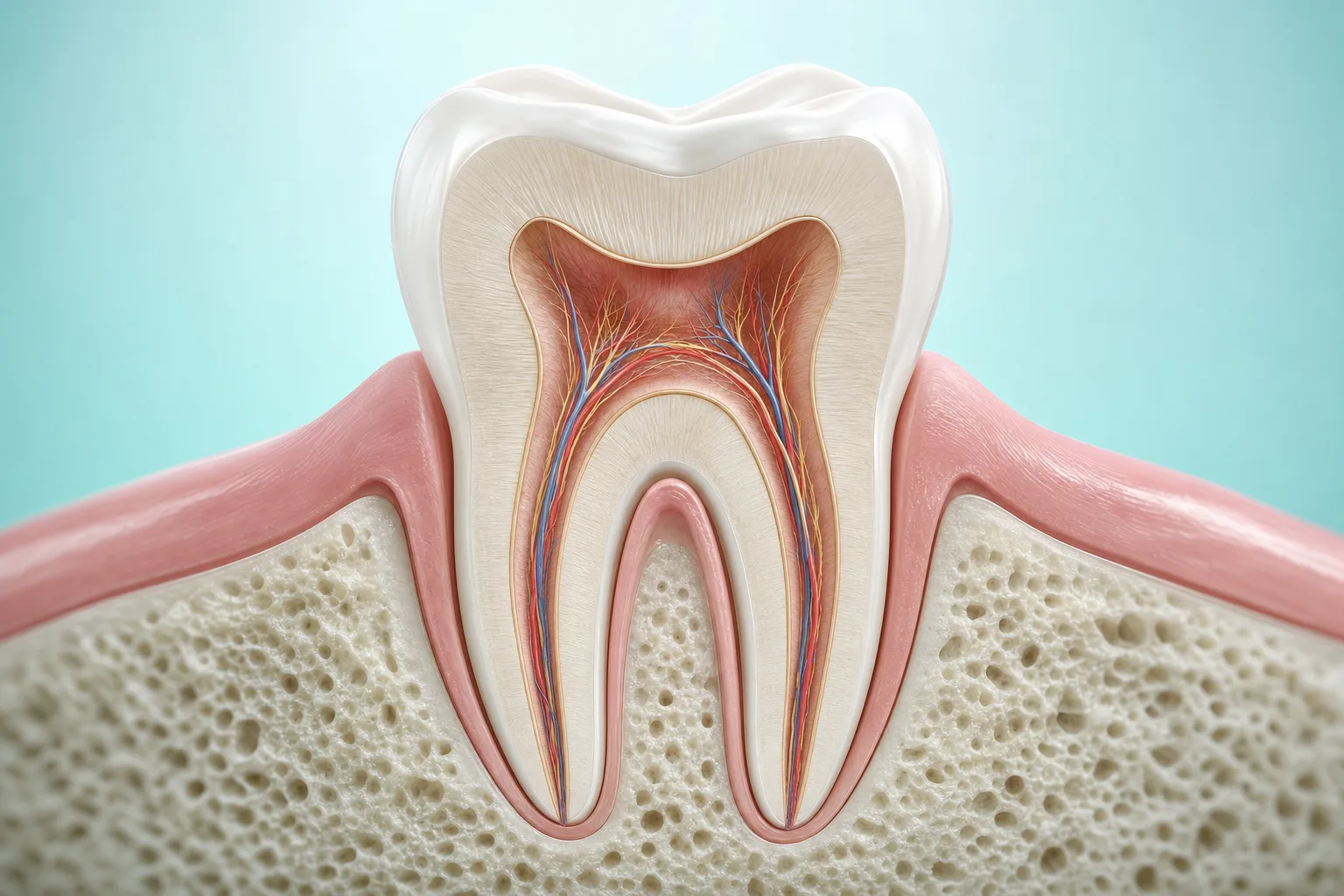
An empty socket does not simply fill in and keep its shape. Once the root is gone, the bone that existed to hold it starts to shrink — most noticeably in width, and fastest in the first six months. Published figures vary, but the direction is consistent: the ridge narrows, and the change is largest early.
That matters for two reasons. If you plan to replace the tooth with an implant, there has to be enough bone left to place one into. And a denture or partial made over a ridge that is still shrinking will need adjusting as the shape changes underneath it.
This is why a socket preservation graft often gets offered at the time of the extraction — grafting material placed into the socket right after the tooth is out, to hold the shape while bone forms. It adds cost on the day and it is not necessary for every tooth, particularly a back molar you have no intention of replacing. It deserves serious thought for a front tooth, or any site where an implant is likely later. Ask directly: if I skip the graft today, what does that change about my options in a year?
How soon can I start replacing the tooth?
| Replacement | Typical earliest start | What sets the timing |
|---|---|---|
| Dental implant, immediate placement | Same appointment as the extraction | Needs intact socket walls, no active infection, and adequate bone — a minority of cases |
| Dental implant, early placement | Roughly 6–8 weeks | Gum has closed and bone is partly formed. A common middle route |
| Dental implant, delayed placement | Roughly 3–6 months | Bone is well formed. Usual path after infection or grafting |
| Bridge | Roughly 6–8 weeks | Gum contour has to be stable or the bridge will not seat against it correctly |
| Partial or full denture | Immediate, or 6–12 weeks | An immediate denture goes in the same day but needs relines as the ridge changes |
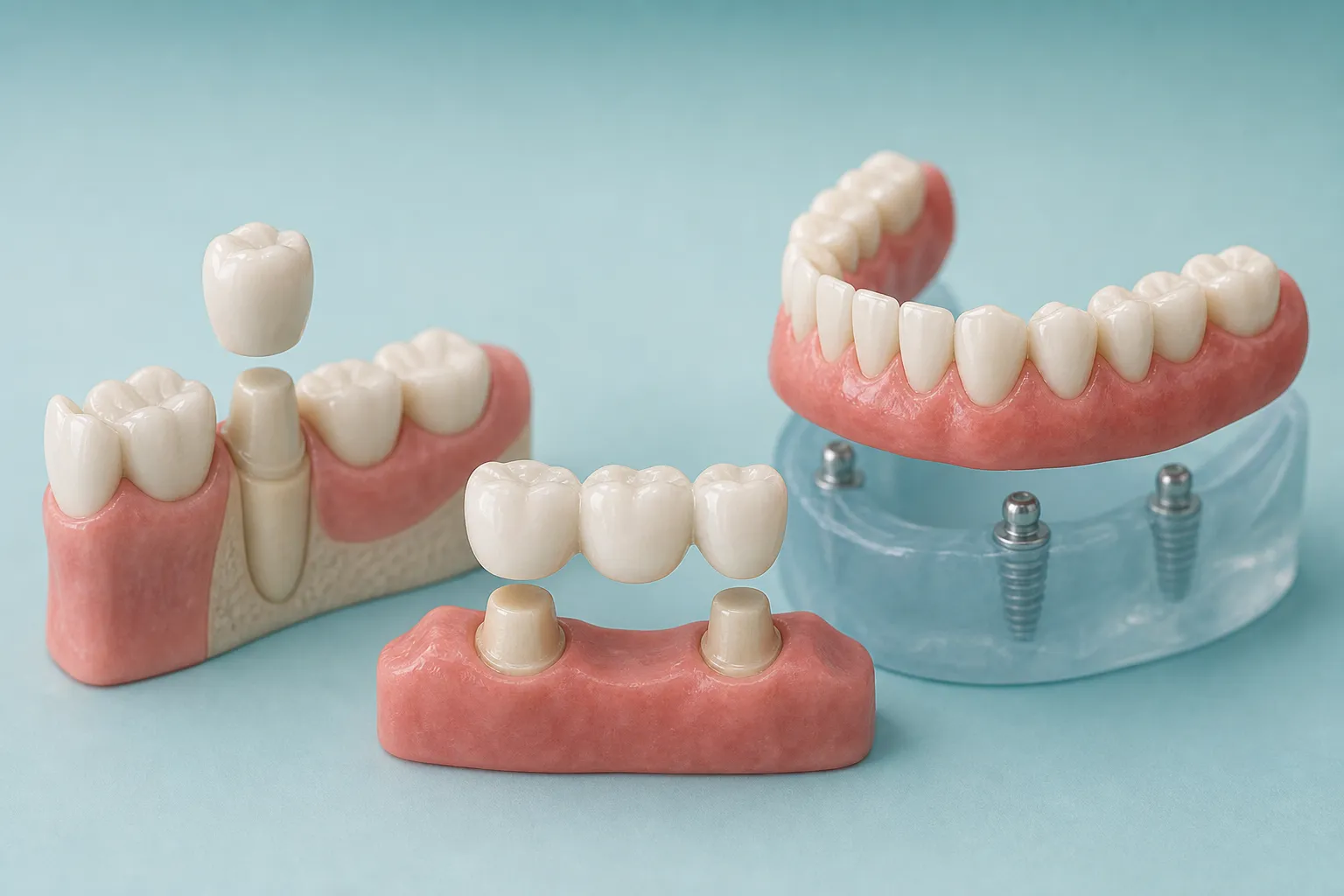
Decide on a plan before the extraction where you can, because the plan changes what happens on the day — whether a graft goes in, how the tooth is sectioned, how much of the socket wall is preserved. Our comparison of implants, bridges and dentures lays out the trade-offs, and the dental implant page covers the surgical timeline in more detail.
If the tooth being removed is one of several failing teeth, that is a different conversation from filling a single gap — and one worth having before you start replacing teeth one at a time.
Questions worth asking at your post-op visit
- Was this a simple or a surgical extraction, and does that change my timeline?
- Do my stitches dissolve, and by when?
- Did I get a graft, and if not, does that limit my options later?
- When should the socket stop trapping food, and how should I clean it until then?
- What specifically should make me call you rather than wait?
If something does not feel right, call
Recovery is mostly boring, and that is the goal. If your pain is climbing when it should be falling, or the socket still feels raw after a week, a quick look settles it — dry socket takes minutes to treat, and there is no reason to spend a weekend guessing. Call Rio Hondo Dental at (562) 928-5559 or book a visit; our Downey team is bilingual and se habla español.
Have questions about your smile?
Dr. Sameer Aljanedi and the team at Rio Hondo Dental Office are here to help. Se habla español.