Restorative Dentistry
Root Canal or Extraction: How to Decide
A tooth that hurts this much makes the decision urgent, not obvious. Treat it and keep it, or take it out. Both are legitimate answers, and the right one turns less on how much it hurts than on how much solid tooth is left above the gum — and on what you are honestly prepared to do about the gap if it comes out.
Root canal or extraction: which is the right call?
Short answer: Save the tooth when enough sound structure remains above the gumline to hold a crown, no root is fractured, and the gum and bone support are reasonably healthy. Choose extraction when the tooth is split down a root, decayed below the bone with no way to expose a margin, loose from advanced gum disease, or otherwise cannot be rebuilt into something that chews.
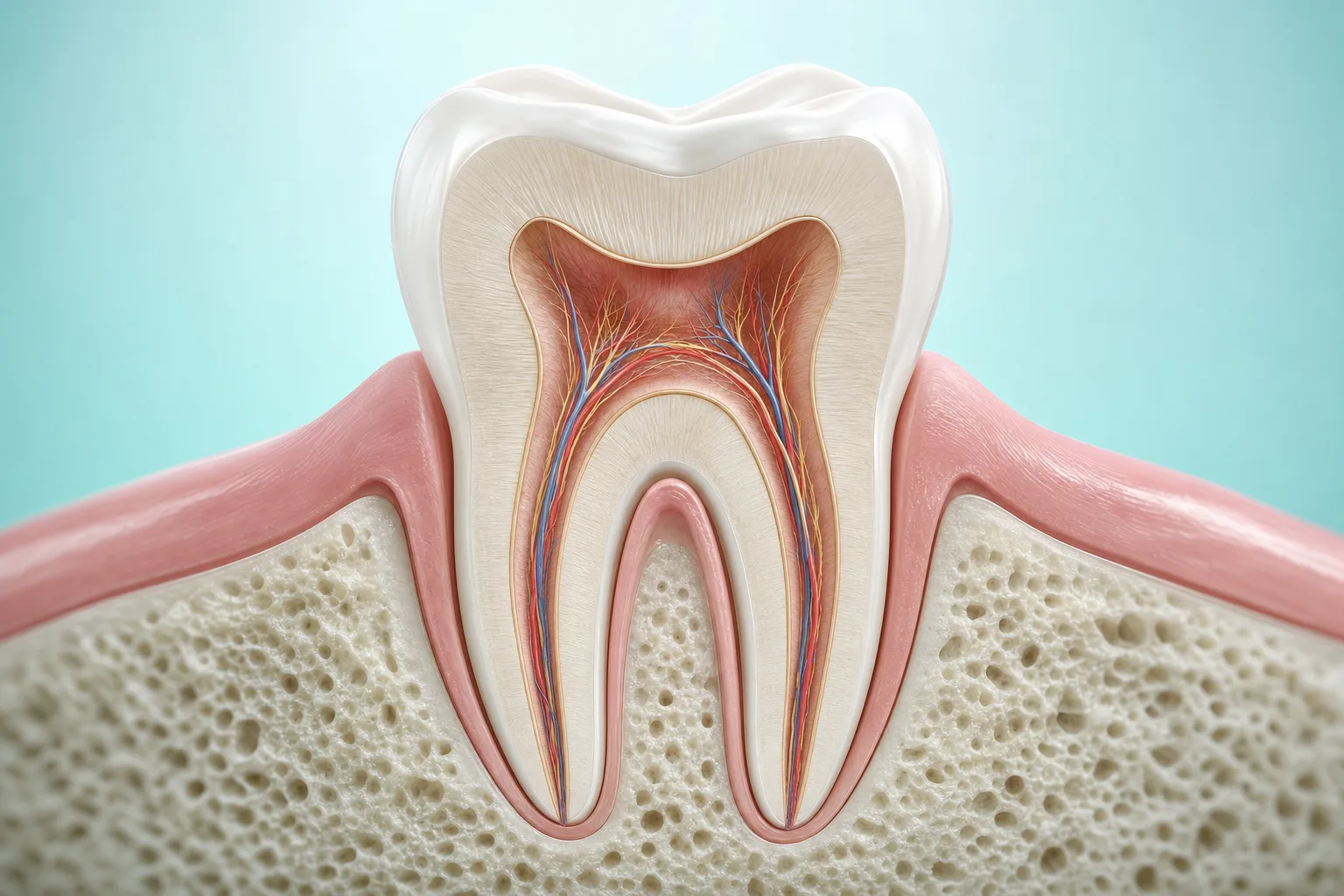
Notice what is absent from that list: pain. Pain tells us the nerve is inflamed or infected, which is why you are in the chair. It says nothing about whether the tooth can be rebuilt afterward. That gets settled by an X-ray, a periodontal probe, and a look at what remains once the decay is cleaned out — occasionally not until the dentist is already partway into the tooth. Root canal treatment removes the infected pulp and seals the canals. It does not add structure back.
What your dentist is actually measuring
Is there enough tooth left to grip?
This is the first question and it decides most cases. A crown needs a collar of solid tooth to clamp onto — commonly described as roughly 1.5 to 2 mm of sound structure standing above the gumline, all the way around. Dentists call that collar a ferrule. Without it, the crown is holding onto filling material rather than tooth, and those restorations tend to loosen, leak, or come off with the root still inside them.
Decay tracking under the gum does not automatically end the discussion. Crown lengthening (reshaping gum and a little bone to expose more tooth) or orthodontic extrusion (slowly drawing the root upward) can create a ferrule where there was none. Both add appointments, cost and often another clinician. Once decay reaches below the crest of the bone on a back tooth, though, the odds of a durable result fall off steeply, and that is the point where most dentists stop recommending heroics.
Is a root cracked?
A vertical root fracture is the one finding that reliably ends the conversation. A crack running lengthwise down a root cannot be sealed, bonded or crowned around — bacteria travel the crack line no matter what is done above it. The classic signs are a narrow, deep, isolated pocket beside an otherwise healthy-looking tooth, a gum boil that drains, disappears with antibiotics and returns, and a J-shaped shadow along the root on an X-ray. Many are confirmed only when the tooth is opened or removed.
A crack confined to the crown portion is a different situation. If it stops above the gum, full coverage can bind the segments and stop the flexing, which is one of the main reasons a crown gets recommended in the first place.
How much bone is still holding the tooth?
A tooth can have a perfectly treatable nerve and still be a poor bet, because the foundation underneath it is gone. If probing depths run deep on every surface and the tooth already moves when pushed, endodontic treatment fixes the wrong problem — the nerve was never the reason it was failing. Advanced periodontal bone loss is the second most common honest reason to recommend removal.
Has this tooth been treated before?
Retreating a previously root-filled tooth is routine and often works, but success rates are generally lower than for first-time treatment, and the fee is higher because the old filling material has to be removed before anything else can happen. A tooth that has already been retreated once and is symptomatic again moves closer to the extraction column.
Is this tooth doing a job?
A second molar with nothing behind it and nothing above it to chew against is not carrying much of your bite. A first molar sitting in the middle of a functioning arch is carrying a great deal. Strategic value belongs in the decision, and it occasionally changes the answer in an unexpected direction — a healthy wisdom tooth behind a doomed molar sometimes drifts forward into the space, or can be moved there deliberately.
A decision tree you can actually follow
- Is a root fractured vertically, or is the tooth decayed below the bone with no way to expose a margin? If yes, plan on removal and move the conversation to what replaces it.
- Is the tooth loose, with deep pockets all the way around? If yes, extraction is usually the honest recommendation regardless of what the nerve is doing.
- If neither applies, is there — or can we create — a solid collar of tooth above the gum? If yes, root canal treatment plus a crown is the tooth-saving path. On a back tooth, that crown is not optional.
- Can you finish the crown in weeks rather than someday? A treated tooth parked under a temporary filling for months frequently reinfects or splits. Then you have paid for both procedures and lost the tooth anyway.
- If it comes out, what goes back in, and when? Answer this before you consent, not afterward. It changes the ten-year picture more than the choice of procedure does.
Step five is the one most people skip, and it is the one that decides whether extraction was the cheap option or the expensive one.
Is it cheaper in the long run to pull the tooth?
Extraction is the cheapest thing that happens on the day. It is rarely the cheapest thing that happens over a decade, because a missing tooth is not a stable state. The mouth reorganizes around a gap whether or not you intend it to.
Fees swing widely by tooth, by plan and by practice, so read the cost column below as relative rather than as anyone's price list. We give a written itemized estimate at the consultation before treatment is scheduled.
| Path | Cost up front | Over the next ten years | What happens to the rest of your bite |
|---|---|---|---|
| Root canal treatment plus a crown | Higher than extraction, lower than extraction plus an implant | The crown may need replacing; a modest percentage of treated teeth need retreatment or come out later | Nothing moves. Spacing, bite height and the bone around the root stay as they are. |
| Extraction plus an implant and crown | Low on the day, then the implant phase spreads over roughly four to eight months | Usually the highest total; hygiene visits and occasional component or crown replacement | Space held, bone loaded, neighbors stay put |
| Extraction plus a fixed bridge | Moderate, and finished in weeks rather than months | Commonly replaced within about ten to fifteen years; two healthy neighbors are permanently crowned to carry it | Space held above the gum, but the ridge under the gap keeps shrinking |
| Extraction plus a partial denture | Lowest of the replacement options, and often the covered route | Relines, repairs and eventual remakes; the clasped teeth take extra strain | Space held while it is worn; the ridge continues to resorb underneath |
| Extraction and nothing | Cheapest by a wide margin on the day | Drifting, over-eruption, food traps, harder cleaning; replacing it later often means grafting first | The bite reorganizes, and the gap gets harder and more expensive to fix each year |
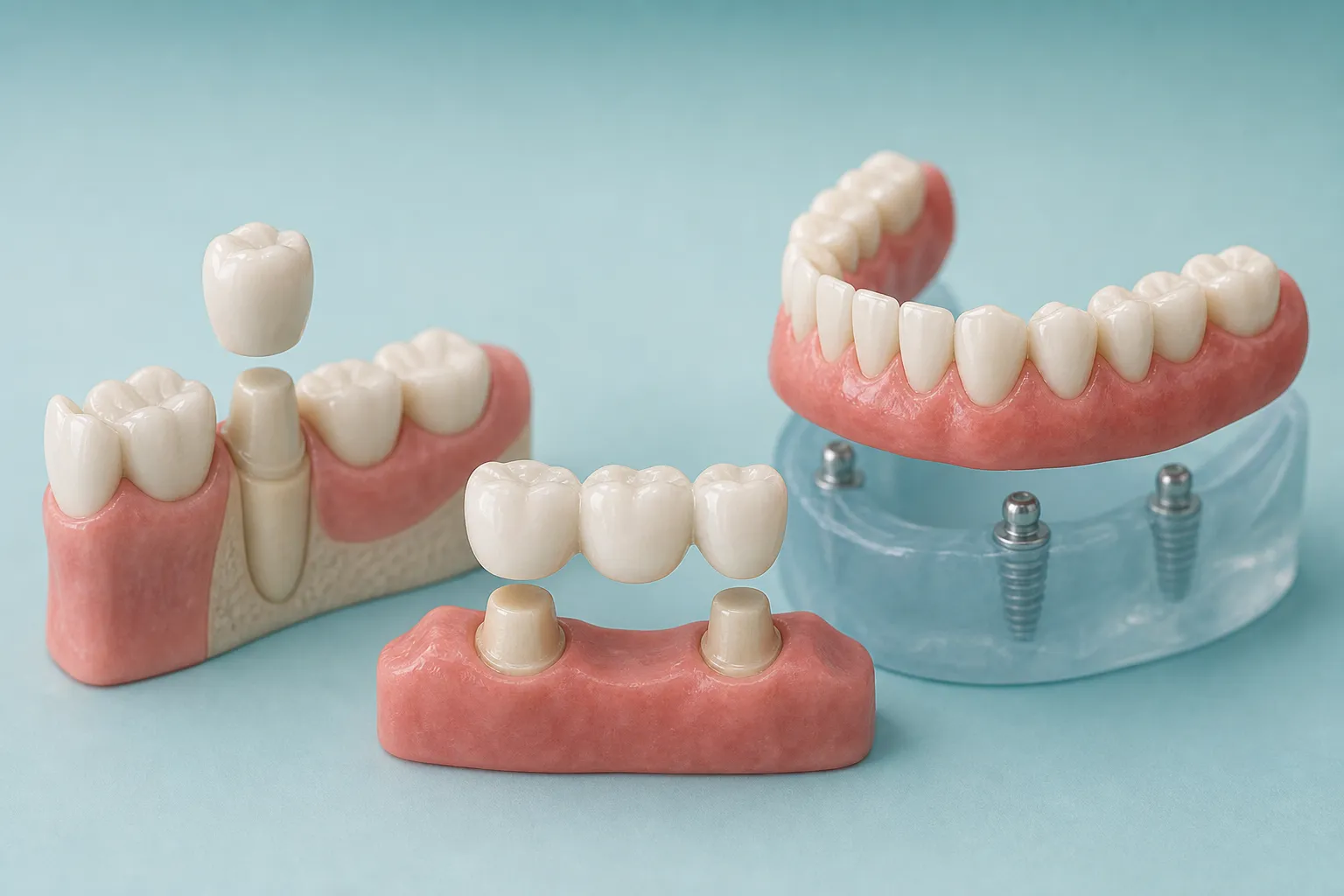
If you are choosing between the last two rows, say so out loud before treatment is planned. It is a legitimate choice, and a dentist who knows that is your plan will sequence things differently — for instance, preserving the socket at the time of removal so the option stays open later. Our overview of the ways a missing tooth can be replaced compares them side by side.
What happens to the space if you never replace the tooth
Three things, each on its own schedule, none of which you feel while they are happening.
- The neighbors drift and tip. Teeth beside a gap lean into it over months and years. Tipped teeth create angled contacts that trap food and resist floss, which is how a single missing molar turns into decay and gum problems on two other teeth.
- The opposing tooth over-erupts. A tooth with nothing to bite against keeps moving toward the empty space. Given enough time it can end up striking gum, needing reduction, or blocking a future replacement outright because there is no longer vertical room to fit anything in.
- The ridge resorbs. Bone that no longer carries a root shrinks — most rapidly in the first several months after removal, then slowly and permanently. This is why someone who waits five years to ask about an implant is frequently told they need a bone graft before the implant can be placed at all.
The honest exception: a last tooth at the back of an arch, with nothing behind it and nothing above it, is sometimes reasonable to leave alone. Make that decision deliberately with your dentist rather than by default.
Which teeth are usually worth saving
Lean toward saving when:
- The tooth is a front tooth or a first molar doing real work in a stable bite.
- Two thirds or more of the root is surrounded by healthy bone and the tooth is firm.
- The decay or fracture stops above the gum, or a ferrule can be created without excessive surgery.
- It is a first attempt at root canal treatment rather than a second or third.
- You would otherwise be replacing it, and the cost of the replacement exceeds the cost of keeping it.
Lean toward removing when:
- A root is fractured vertically.
- Decay extends below the bone level and crown lengthening would compromise the neighboring teeth.
- The tooth is mobile from periodontal disease that is already advanced elsewhere in the mouth.
- It is a wisdom tooth, or a second molar with no opposing contact.
- Previous root canal treatment has already failed once and the same symptoms are back.
Does Denti-Cal cover a root canal on a molar?
This is the fork many of our patients actually face, and glossing over it would not help anyone. Under Medi-Cal Dental, root canal treatment on adult front teeth and bicuspids is generally a covered benefit. Endodontic treatment on adult molars generally is not — it has typically been available only where extraction is medically contraindicated and that contraindication is documented, and it runs through prior authorization. Extractions are covered, and emergency treatment for pain and infection sits outside the adult annual benefit limit.
Which creates an uncomfortable arithmetic: for an adult molar, the covered route is often removal, and saving the tooth means paying out of pocket. That does not make removal the wrong answer. It does mean you should see the two options side by side, with the replacement cost included, before choosing. A covered extraction followed by a covered partial denture is a reasonable, staged plan — and paying privately to keep a healthy first molar is also a reasonable plan.
Program criteria change and determinations are made case by case, so confirm current rules with our front desk or with the state program before you build a plan around them; the DHCS Manual of Criteria and Smile California are the primary sources. What we accept is spelled out on our Denti-Cal and Medi-Cal page, and our guide to adult Denti-Cal benefits goes further into the categories.
Private plans have their own wrinkle. Root canal treatment and the crown that follows are usually both classified as major services, commonly paid at around half the allowed fee, and together they can absorb most of an annual maximum. If the diagnosis lands late in the year, ask whether the endodontic treatment can be completed in one benefit year and the crown in the next — the temporary must still be replaced within weeks, not months, so this only works near a plan reset. CareCredit, Cherry and Sunbit and our in-house membership plan cover the gap for patients without benefits.
When the whole arch is the problem, not one tooth
Sometimes the tooth in front of us is the fourth failure in two years, and the pattern matters more than the tooth. If most of an arch is breaking down from long-standing gum disease or widespread decay, treating them one at a time can be the most expensive route to the same destination. It is worth asking your dentist directly: if we spend this money on this tooth, what does my mouth look like in five years?
Where an arch is genuinely failing, one path we provide is a removable overdenture that snaps onto four implants. It is taken out for cleaning, but it is anchored rather than resting loose on the gums, and it transfers chewing load into the implants instead of onto the ridge. Our page on removable overdentures on four implants explains the candidacy and the maintenance involved. That is a conversation to have deliberately, not one to back into by losing teeth one at a time.
Get seen urgently if… your face or the floor of your mouth is swelling, you have fever with dental pain, you cannot open your mouth fully, or swallowing and breathing feel restricted. Spreading infection is not something to hold until a routine appointment — go to an emergency room now if breathing or swallowing is affected. A throbbing tooth that wakes you at night, or a gum boil that drains and returns, needs an appointment within days, not weeks. Our urgent dental care page covers what to do in the meantime.
Five questions to ask before you decide
- Is there enough tooth above the gum to hold a crown, and can you show me? A dentist applying criteria can point at the margin on a photo or a scan.
- What is the prognosis for this specific tooth, in words? Good, fair or guarded means something. Ask which one and why.
- If it comes out, what are my replacement options and what does each cost over ten years? Compare totals, not deposits.
- If I am not going to replace it, does that change your recommendation? It should.
- What happens if I do nothing for three months? The honest answer is usually that infection does not resolve on its own, and the restorable options narrow.
If removal ends up being the right call, the recovery is more manageable than most people expect — our post-operative checklist walks through the first week, and the extraction page covers what the visit itself involves. The American Dental Association's patient library at MouthHealthy is a reasonable neutral second opinion on both procedures.
Get the tooth looked at before the options narrow
Bring the X-ray or bring the tooth — Dr. Sameer Aljanedi will tell you plainly whether it is restorable, what it would take, and what the alternative costs over the long run. Our team is bilingual and se habla español. Book an evaluation or call (562) 928-5559.
Have questions about your smile?
Dr. Sameer Aljanedi and the team at Rio Hondo Dental Office are here to help. Se habla español.