Implants & Restorative
Full & Partial Dentures in Downey
A denture works as well as the ridge it sits on and the care taken making it. Here is how full and partial dentures are actually made, what the first month feels like, what moves the price, and when a reline beats starting over.
Se habla español · Serving Downey, Pico Rivera, South Gate, Bellflower & nearby
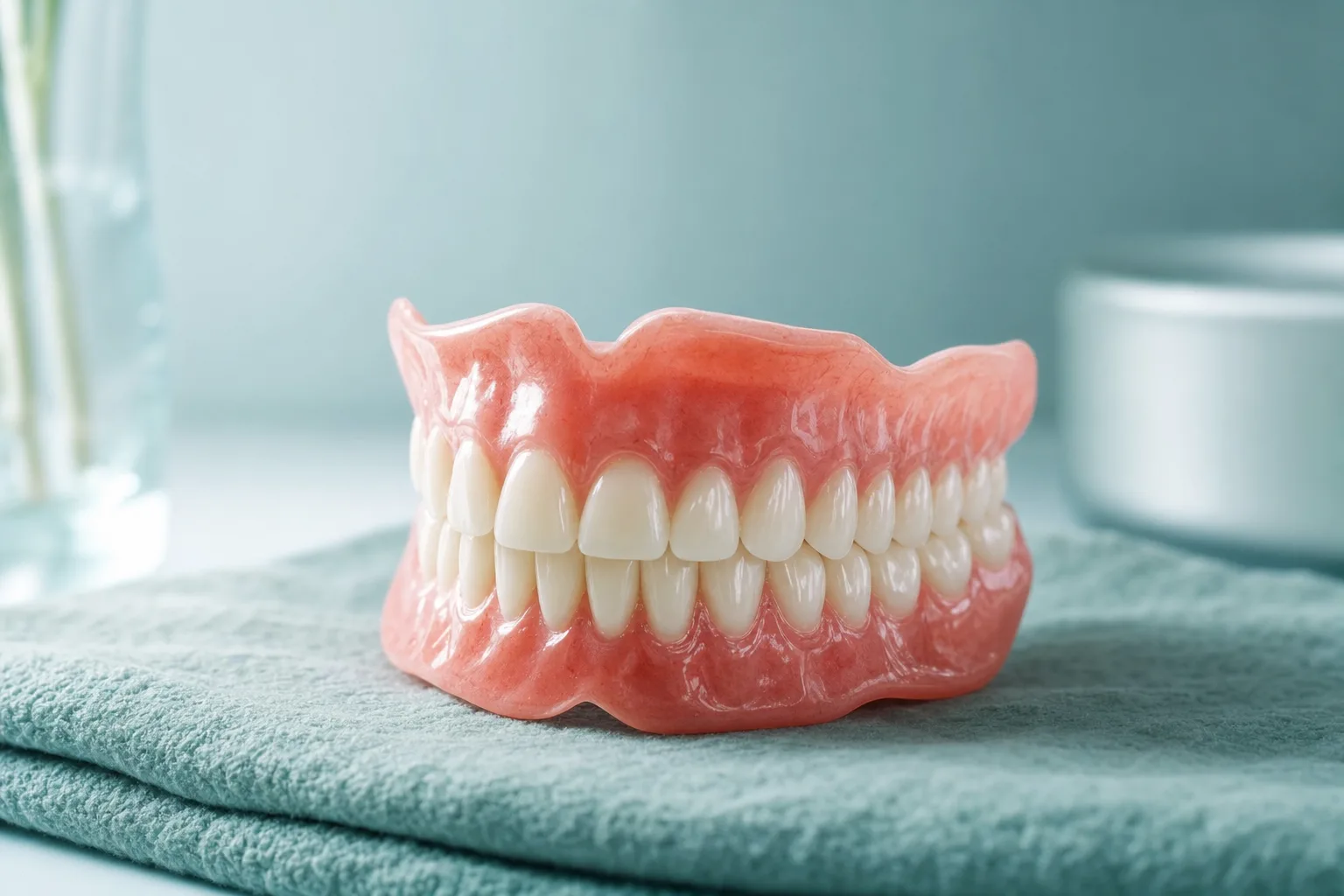
Two things decide whether you end up happy with a denture: how carefully it is made, and how much jawbone is left to rest it on. The first is in our control. The second is why two people can have the same treatment and completely different experiences with it.
This page is about conventional removable dentures — full and partial, resting on the gums. If your real complaint is a lower plate that will not stay put, that is a different problem with a different fix — an overdenture anchored on four implants — and there is more on it further down.
Full or partial: which one do you need?
Short answer: A full (complete) denture replaces every tooth in an arch and rests on the gums. A partial fills the gaps around teeth you still have and clasps onto them for support. Both are lab-made from impressions of your mouth, both usually take three to five visits over several weeks, and both need adjusting as the ridge underneath keeps changing shape.
Keeping natural teeth matters more than most patients expect. Even a handful of remaining teeth give a partial something to hold onto and slow the bone loss that makes a full denture harder to fit years later. If a tooth can reasonably be saved, we will argue for saving it — even when taking it out would be simpler for us. Read our honest comparison of tooth replacement options before you agree to a full clearance.
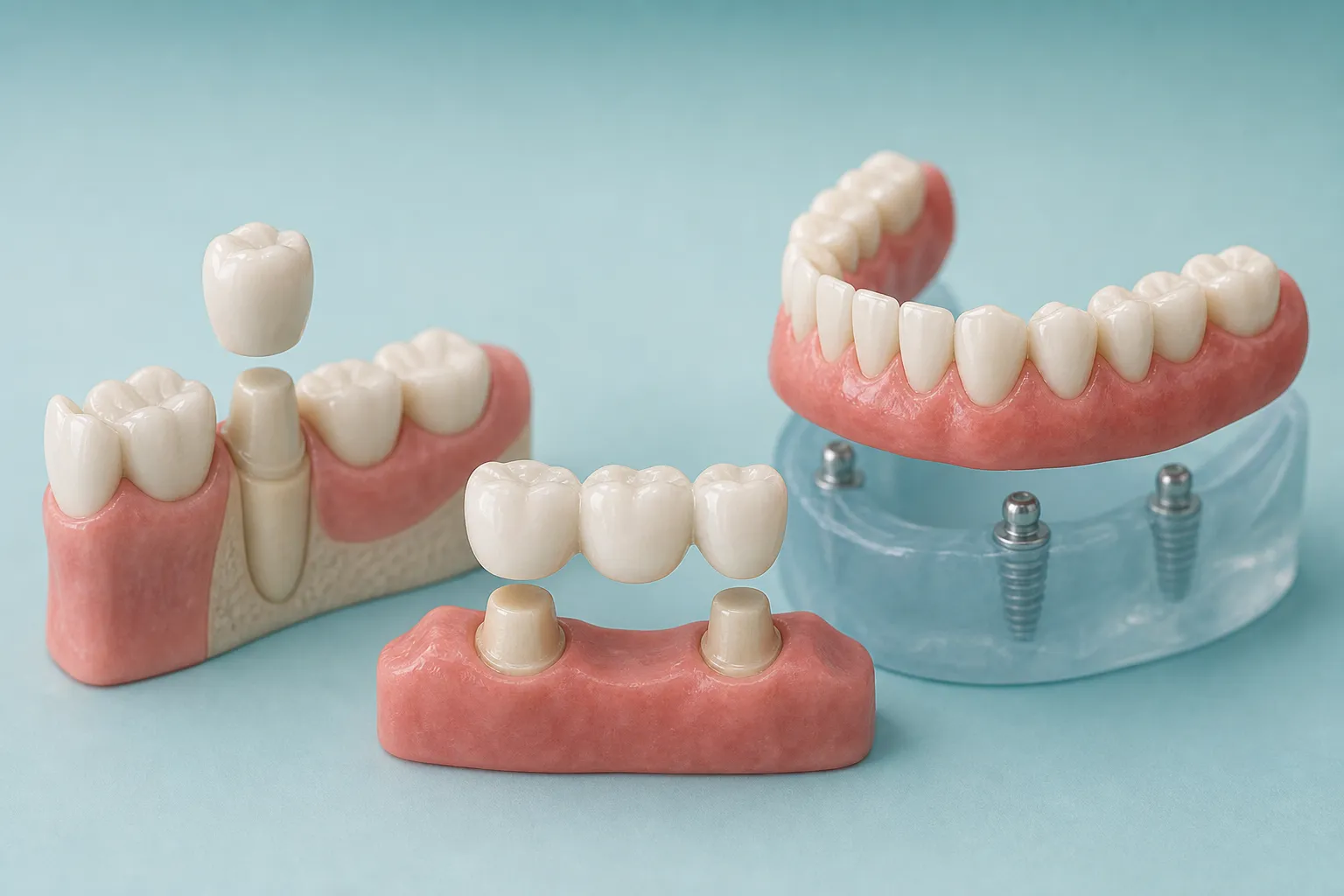
Partials come in two broad builds. A cast metal framework is thinner, stronger and holds its shape, so it feels less bulky and lasts longer. An all-acrylic or flexible partial costs less and is often meant as a transitional appliance while things settle. They are not the same product, and the difference shows up in comfort within a year.
How the process actually goes, visit by visit
- Exam, X-rays and a written plan. We assess what is left, the height and shape of your ridge, and whether any teeth need to come out. You get the plan and the cost in writing before anything begins.
- Extractions, if they are needed. Gums are normally allowed to heal for six to eight weeks before final impressions — unless you are having an immediate denture. Here is what an extraction and its recovery involve.
- Impressions and bite records. Usually two sets: a preliminary impression, then a precise one taken in a custom tray built for your mouth. We also record how your jaws meet and pick tooth shade, shape and size with you.
- The wax try-in. The teeth are set in wax so you can see and feel them before anything is finished. Be picky at this appointment. If the teeth look too white, too long or too even, say so — changes are easy in wax and expensive in acrylic. Bring someone whose opinion you trust.
- Delivery and adjustments. The finished denture goes in, and you should plan on two or three short adjustment visits over the following month. Sore spots in the first weeks are normal and fixable, not evidence that something went wrong.
Start to finish, most conventional cases run four to eight weeks once healing is complete. Rushing those steps is how people end up with a denture that lives in a drawer. If you want to know what the first month with a new denture actually feels like, we have walked through the adaptation curve, the eating progression and the sore spots week by week.
Immediate dentures: leaving with teeth the same day
An immediate denture is made in advance and placed the moment your teeth are removed, so you are never seen without teeth. For many people that is worth a great deal. The trade-off is rarely explained properly: the denture does not shrink — the ridge underneath it does.
After extractions, bone and gum remodel fastest in the first three to six months and keep changing for a year or more. A denture fitted to a fresh socket has been fitted to a shape that is about to disappear. In practice that means:
- A temporary soft liner, and often one or more relines during the first year.
- Gradual looseness and more adhesive as the months pass — expected, not a failure of the work.
- A definitive reline or rebase once the ridge settles, and occasionally a remade denture.
Plan and budget for that at the start. Patients who are told about the refits up front take them in stride; patients who are not feel they were sold something. If appearance during healing is not critical for you, a conventional denture made after the gums have healed generally fits better and costs less across the first two years.
Reline, rebase, repair or replace — four different things
These words get used interchangeably, including by dental offices, and that is how people end up paying for a remake they did not need. Here is what each one actually does.
| Treatment | What we do | When it is the right call | What it will not fix |
|---|---|---|---|
| Reline | Add new material to the fitting surface so it matches your ridge again | The denture still looks good and bites well, but it rocks or needs adhesive. Commonly every two to three years | Worn-down teeth, cracks, or a collapsed bite |
| Rebase | Replace the whole pink acrylic base and keep the existing teeth | The base is stained, brittle or repeatedly patched while the teeth are still sound | Teeth worn flat or discoloured beyond matching |
| Repair | Bond a clean fracture, or replace a lost tooth or broken clasp | A drop, a snapped clasp, a clean break — bring every fragment | The looseness or bad bite that caused the break in the first place |
| New denture | Fresh impressions, new bite records, a new appliance | Teeth worn flat, bite height lost, five to ten years of wear, or repeated repairs | A ridge that has resorbed too far to hold anything — that needs implant support |
Never repair a denture at home. Household glue is not safe in the mouth and it sets the pieces a millimetre out of position, which turns a routine lab repair into a full remake. Bag every piece and bring them in — more on same-week denture repairs and refits.
What actually drives the price
We quote in writing after an exam instead of posting numbers, because "denture" covers wildly different work. These are the variables that move your figure:
- Full or partial, one arch or both. A partial with a cast framework and precision clasps is a more involved build than its size suggests.
- Extractions and ridge preparation. How many teeth come out, and whether sharp bone edges or excess tissue need smoothing before anything can sit comfortably.
- Grade of teeth and base. Economy acrylic teeth wear flat faster, which drops your bite height and shortens the life of the denture. Better tooth material and a stronger base cost more up front and are usually the cheaper decision over ten years.
- Immediate or conventional. Immediates carry the extra liners and relines described above.
- How you are paying. PPO plans typically pay a percentage up to an annual maximum, HMO plans work from a fixed copay schedule, and Denti-Cal follows program rules of its own.
We verify your benefits before treatment starts, split covered from non-covered items in writing, and can spread the balance through CareCredit, Cherry or Sunbit — see how our payment options work. No insurance at all? Our in-house membership plan takes the sting out of exams, X-rays and cleanings. Check current offers before you book, too.
Dentures on Denti-Cal and Medi-Cal
Adult Denti-Cal benefits often include full and partial dentures, and for someone who has lost most of their teeth that coverage is the difference between eating properly and not. A large share of the patients we see in Downey are covered this way. The conditions below are program rules rather than ours, and knowing them early saves disappointment:
- Larger prosthetic work commonly requires prior authorization, which takes time. Begin the paperwork early rather than a week before you want teeth.
- Replacements are subject to frequency limits — you cannot get a new set whenever you like, and exceptions generally have to be documented.
- Implants are generally not a covered benefit, so if you later decide to anchor the denture, expect that portion to be private-pay or financed.
We confirm your current eligibility at the visit, submit what needs submitting, and tell you what your share will be before the case goes to the lab. More detail on how we handle Denti-Cal and Medi-Cal patients, plus a plain-English breakdown of what adult Denti-Cal benefits actually cover.
The honest drawbacks
A good denture restores your face, your speech and a great deal of function. It does not restore teeth, and any office that tells you otherwise is setting you up for disappointment.
- Bite force drops sharply. A conventional full denture delivers a small fraction of what natural teeth managed. Most people adapt their diet more than they expected to.
- An upper denture covers the palate. That plate is what creates suction, but it dulls taste and temperature. Lower dentures have far less surface to grip and a tongue working against them, which is why the lower is almost always the difficult one.
- Speech takes a few weeks. S and F sounds are the usual culprits. Reading aloud for ten minutes a day genuinely speeds it up.
- Bone keeps shrinking underneath. Tooth roots are what stimulate the jaw, and a denture resting on the gums does not replace that, so the ridge continues to flatten. This is the reason refits are a permanent part of denture ownership rather than a one-off, and the clearest difference between a plate that rests on gum and one that clips onto implants.
Get seen urgently if… a sore under your denture has not healed within about two weeks, you develop facial swelling, fever or a foul taste, or the tissue under the plate is raw and bleeding. A sore that will not heal needs examining rather than filing down — that is part of what an oral cancer screening is for. Swelling with pain is a dental emergency and should not wait for a routine slot.
Daily care, and what happens if you skip it
Brush your denture every day with a soft denture brush and a non-abrasive cleaner — ordinary toothpaste is too gritty and scratches the acrylic, and scratches hold stain and plaque. Do it over a folded towel or a basin of water so a slip does not end in a repair. Never use hot water, which warps the base out of shape permanently. At night, take them out, keep them in water or a soaking solution so they do not dry and distort, and brush your gums, tongue and palate before they go back in. The ADA's MouthHealthy covers the same routine if you want a second source.
Skipping those steps has predictable consequences. Sleeping in a denture is the leading cause of denture stomatitis. Wearing one that no longer fits speeds up ridge shrinkage and creates chronic sore spots. And people quietly stop coming in once they have no natural teeth left, which is exactly when the soft tissue most needs a set of eyes on it once or twice a year.
When movement is the real problem
Some patients do everything right and still fight a lower denture that floats. Another reline will not solve that, and neither will more adhesive. The fix is anchorage: an overdenture that snaps onto four implants holds firm while you eat, usually lets us cut away the plate covering the palate on an upper, and slows the bone loss that caused the trouble. A two-implant snap-in is a smaller, cheaper step in the same direction. If the ridge has already thinned, rebuilding bone with a graft sometimes reopens options you were told you had lost. A 3-D scan settles which of those is realistic for your jaw in a single visit.
What to ask before you say yes
- Is this an immediate or a conventional denture, and how many relines should I expect in the first year?
- Is a wax try-in included, and can I see the teeth before they are processed?
- What grade of teeth and base am I being quoted, and what does the next grade up change?
- How many adjustment visits are included in the fee, and what do extra ones cost?
- If this partial is transitional, what is the plan after it?
- What will my plan cover, what will it not, and what happens if authorization is denied?
Any office worth using answers those without hesitating.
If you are weighing a first set of dentures, or the ones you have now live in a drawer, come in and let us look at the ridge before you decide anything. Book a consultation with Dr. Sameer Aljanedi in Downey or call (562) 928-5559 — we welcome new patients, accept most PPO & HMO plans plus Denti-Cal and Medi-Cal, and se habla español.
FAQ
Frequently asked questions
How much do dentures cost?
The same words cover very different work, so we quote in writing after an exam rather than posting a number. What moves the figure: full or partial, one arch or two, how many extractions and how much ridge smoothing is needed, the grade of teeth and base, and whether it is an immediate denture that will need extra relines. We verify your benefits first and accept most PPO and HMO plans plus Denti-Cal and Medi-Cal.
How long does it take to get dentures?
Most conventional cases take three to five visits over about four to eight weeks, and that clock starts after extraction sites have healed — usually six to eight weeks. Immediate dentures go in the day your teeth come out, but they trade that speed for extra refits during the first year.
What is the catch with immediate dentures?
Your denture does not shrink, but the ridge underneath it does. Bone and gum remodel fastest in the first few months after extractions, so an immediate denture usually needs a soft liner and one or more relines before it settles, and sometimes a definitive reline or remake at the end of the first year. Budget for that from the start.
Do I need a reline or a whole new denture?
If the teeth still bite well and the denture looks fine but it rocks or needs more adhesive, a reline usually solves it. If the teeth are worn flat, the bite has collapsed, or it has already been patched several times, a reline is money spent on the wrong problem. We will tell you which one you are looking at before you commit.
Does Denti-Cal cover dentures?
Adult Denti-Cal benefits often include full and partial dentures, subject to program rules, frequency limits and prior authorization. Replacement is not available on demand, and authorization takes time, so start early. We check your current eligibility, submit the paperwork, and separate covered from non-covered items in writing before anything goes to the lab.
Will I be able to eat normally?
Expect soft food for the first week or two, then small pieces chewed on both sides at once. Most people manage a broad diet within a couple of months, but a conventional denture delivers a fraction of natural bite force, and steak, corn on the cob and hard apples often stay difficult. If eating is the main goal, ask about securing the denture on implants.
Should I sleep in my dentures?
No. Leaving them in overnight is the most common cause of denture stomatitis, the red and sore inflammation of the palate. Take them out, brush them, keep them in water or a soaking solution, and let your gums rest and recover for those hours.