Specialty Care
Gum Disease Treatment
Bleeding or swollen gums are not something to wait out. Gum disease is the leading cause of adult tooth loss, and it is highly treatable — the earlier we measure it, the less it takes to stop it.
Se habla español · Serving Downey, Pico Rivera, South Gate, Bellflower & nearby
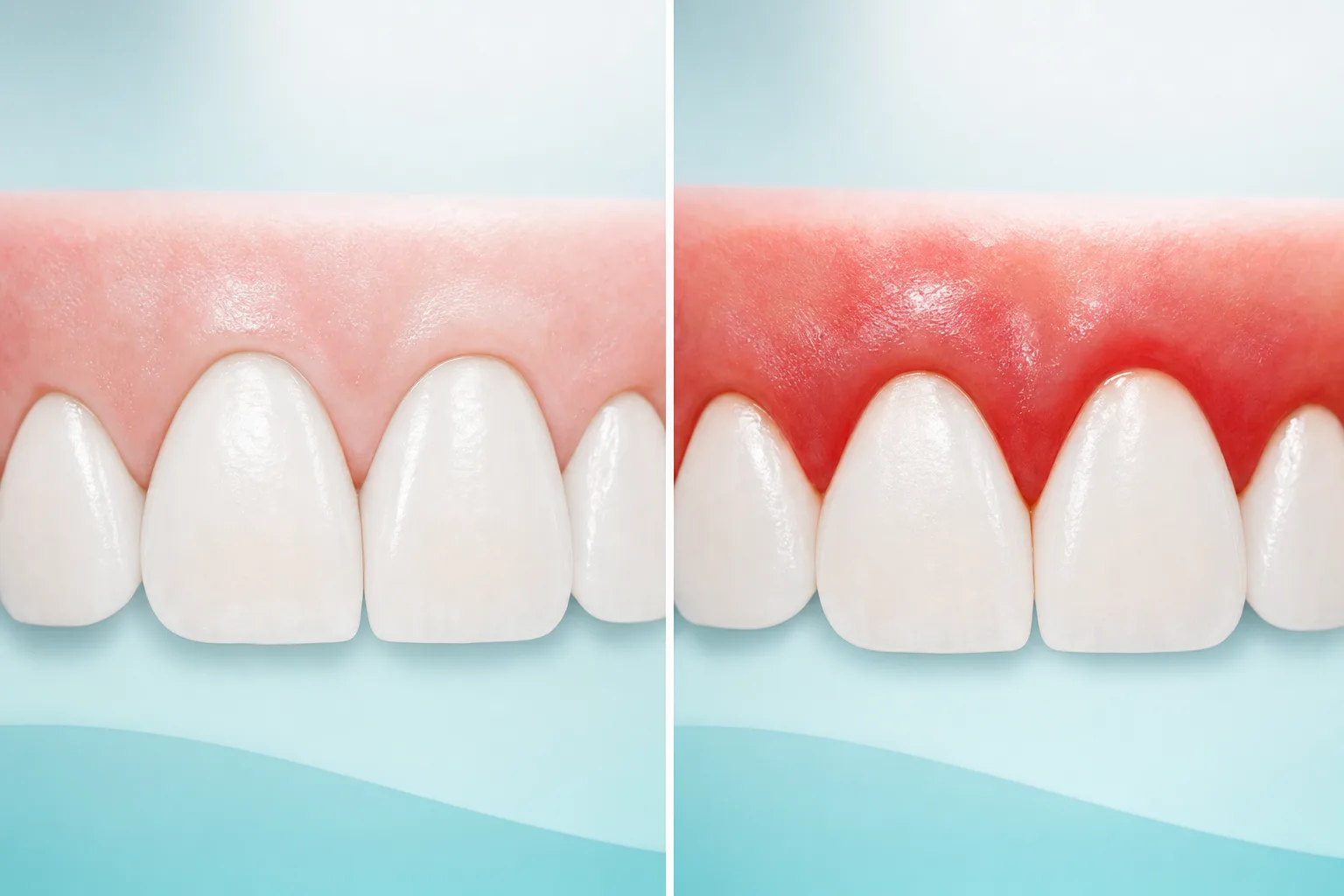
Gum disease is the leading reason adults lose teeth, and it does most of its damage without hurting. That combination — common, quiet, permanent — is why we measure the gums around every tooth at a checkup instead of waiting for someone to complain.
How do I know if I have gum disease?
Short answer: Bleeding when you brush or floss is the earliest dependable sign — healthy gums do not bleed. Puffiness, dark red margins, breath that comes back an hour after brushing, gums that look like they are receding, and any looseness point the same way. The actual diagnosis comes from two chairside findings: the pocket depth measured around each tooth, and the bone level visible on your X-rays.
Plenty of people with moderate periodontitis feel completely fine. The tissue being destroyed — the fibers and bone anchoring the root — has almost no nerve supply, so there is nothing to ache. What patients usually notice first is the pink in the sink, and many decide it means they brushed too hard. It rarely does.
If the measurements come back deep, the first treatment is almost always scaling and root planing, the deep cleaning that clears hardened deposits from the root surfaces below the gumline. This page covers the condition and the whole arc of care; that page covers the procedure itself in detail.
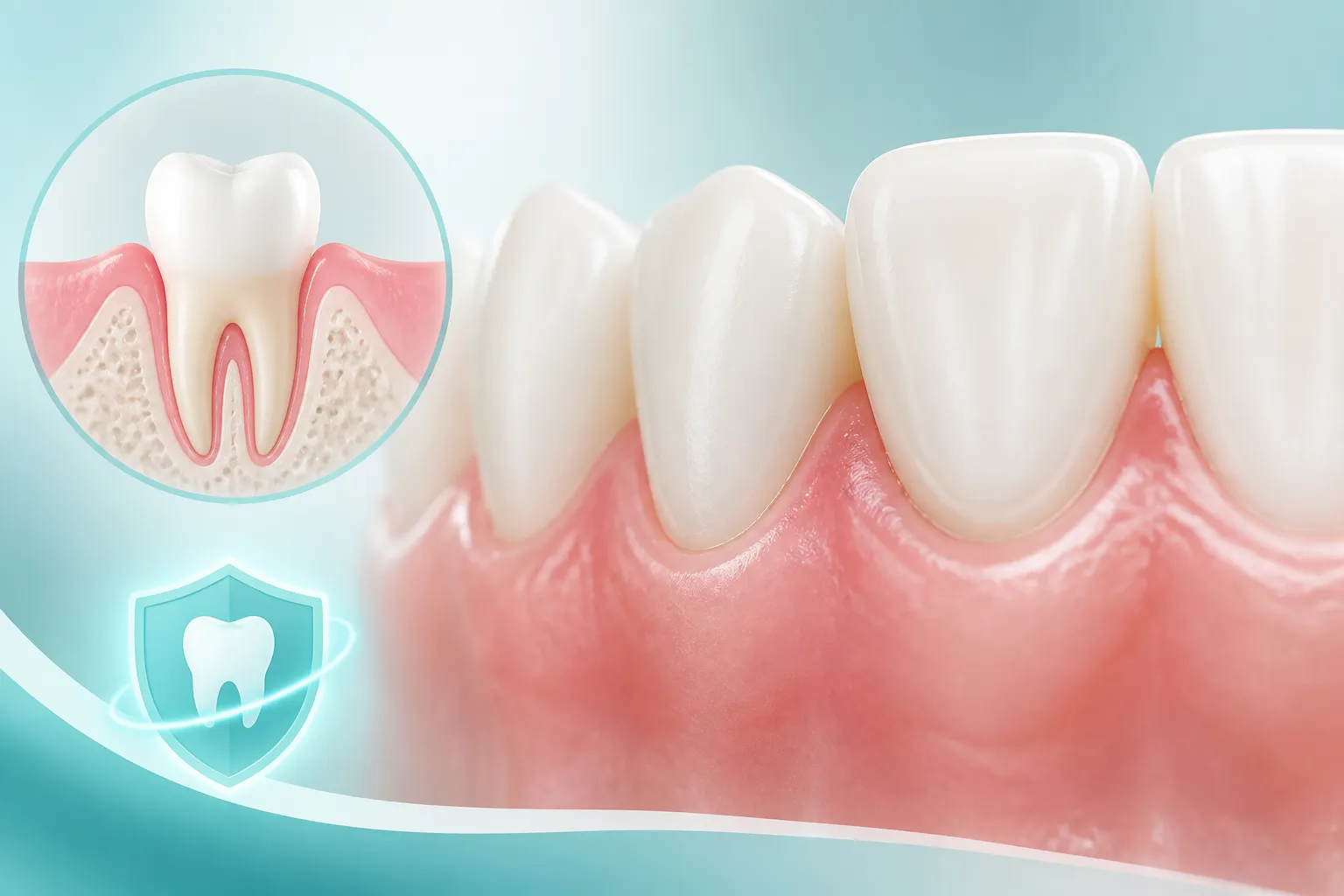
What the pocket depth numbers actually mean
A periodontal probe is a small ruler. We walk it gently into the crevice between gum and tooth at six points per tooth and read off the millimetres, then note whether that site bleeds. Numbers alone are not a diagnosis — a 4 mm pocket that never bleeds behaves very differently from a 4 mm pocket that bleeds every time it is touched.
| Pocket depth | Bleeding on probing | What it usually means | Typical plan |
|---|---|---|---|
| 1–3 mm | No | Healthy gums | Routine cleaning, commonly every six months |
| 1–3 mm | Yes | Gingivitis — inflammation only, no bone lost | Regular cleaning plus real home care; recheck in about a month |
| 4–5 mm | Yes | Early periodontitis — bone loss has started | Scaling and root planing, then maintenance visits |
| 5–6 mm | Yes, with visible bone loss on X-ray | Moderate periodontitis | Scaling and root planing, shorter recall interval, sometimes surgical access |
| 7 mm and deeper | Yes, often with mobility or abscesses | Advanced periodontitis | Periodontal surgery, grafting at selected sites, removal of hopeless teeth |
Ask to see your chart. If nobody has probed and recorded numbers, no one has diagnosed gum disease — they have guessed at it.
What can be reversed, and what cannot
Gingivitis reverses completely. Give the gums a thorough cleaning and four weeks of genuinely consistent brushing and cleaning between the teeth, and the tissue tightens back down as if nothing happened. That is the whole window, and most adults pass through it without knowing — here is where the line falls between the stage that reverses and the ones that only get held steady.
Once bone is gone, it does not grow back on its own. Treatment for periodontitis is about stopping the loss and holding what remains — a fair trade, but a different promise. Gum recession follows the same rule: tissue that has migrated down the root stays there unless it is grafted back, which is why receding gums deserve attention early rather than after the roots are exposed.
The treatment path, start to finish
- Exam and full-mouth charting. Six measurements per tooth, bleeding points noted, plus X-rays to read the bone. This is also when we screen the soft tissue — an oral cancer screening is part of the same look.
- Scaling and root planing. Usually split across two visits, half the mouth at a time, with the area numbed. Larger or more anxious cases can be done under sedation.
- Re-evaluation, roughly four to six weeks later. We re-probe the same sites. Pockets that were 5 mm often read 3 mm once the inflammation resolves and the tissue re-adapts.
- Periodontal maintenance. Commonly every three to four months rather than six, because the bacteria repopulate a treated pocket in about that time.
- Further treatment where sites do not respond. Isolated deep pockets may need surgical access, and in selected defects bone grafting can rebuild support. Most patients never reach this step.
What the first week after a deep cleaning is really like
Honest version, because this is where expectations usually break:
- Day of treatment. Numb for two to four hours. Do not chew until sensation is fully back — biting a numb cheek is the most common self-inflicted injury after this appointment.
- Days one to three. Gums feel bruised and tender. Cold water on the roots can be sharp. Rinsing with warm salt water helps more than most people expect.
- Days three to seven. Sensitivity usually peaks and then eases. The gums start to look tighter and less angry.
- Weeks two to four. Bleeding drops off, breath improves. Here is the drawback nobody mentions: as swollen tissue shrinks back to a healthy size, teeth can look slightly longer and small gaps may appear between them. That space was always there, hidden under inflammation. A sensitivity toothpaste used consistently takes the edge off the root sensitivity within a few weeks.
What happens if you leave it alone
Nothing, for a while. That is the trap. Bone loss is gradual, silent and cumulative, and the first unmistakable symptom — a tooth that moves — arrives only after a large share of the support is gone. From there the sequence is predictable: teeth drift, the bite changes, chewing shifts onto whatever still feels solid, and abscesses start appearing in the deepest pockets.
The arithmetic is worth sitting with. Treating and maintaining a set of teeth costs a fraction of replacing them, and delay narrows the options too. Less remaining bone means more preparation before implants become possible, and some sites end up needing a graft first. If teeth are already lost, our overview of how missing teeth can be replaced lays out the realistic choices.
Get seen urgently if… your face or jaw is swelling, you have a fever alongside gum pain, a pimple-like bump on the gum is draining, or a tooth has suddenly become loose or painful to bite on. Those are signs of an active infection rather than slow-moving gum disease, and they need same-day attention.
Risk factors that change your plan
Two people with identical pocket depths do not always get identical plans. Smoking and vaping constrict blood flow to the gums, mask bleeding and blunt the response to treatment — smokers heal less predictably and relapse more often. Diabetes runs in both directions: poorly controlled blood sugar worsens gum disease, and untreated gum disease makes blood sugar harder to control. Pregnancy hormones amplify the gum response to plaque, which is why bleeding often shows up in the second trimester. Dry mouth from common medications removes saliva's washing effect. Heavy grinding does not cause gum disease, but it loads already-weakened teeth, and a night guard is sometimes part of the plan for that reason.
The whole-body link is real and worth understanding rather than fearing. Chronic oral inflammation does not stay in the mouth, and the research connecting gum inflammation and cardiovascular risk is a large part of why physicians now ask about it. The American Dental Association and the CDC both treat periodontal health as a general health measure, not a cosmetic one.
Cost, coverage and what moves the number
We give you a written estimate before anything starts, but it helps to know what the estimate is built from:
- How many quadrants are involved. Scaling and root planing is billed by quadrant. One affected area costs far less than four.
- Severity within each quadrant. A quadrant with a handful of 4 mm sites is a different appointment from one with 7 mm pockets and heavy calculus.
- Whether sedation is used. Optional, and priced separately.
- Your maintenance interval afterward. Periodontal maintenance is a different service from a routine cleaning, and plans vary in how many they allow per year.
- Whether any sites need surgery or grafting later. Uncommon, but it belongs in the conversation up front rather than as a surprise.
Most PPO and HMO plans cover scaling and root planing, because it treats an active disease rather than being elective. We also accept Denti-Cal and Medi-Cal, which often help with periodontal treatment subject to program rules and frequency limits — we verify your exact eligibility and benefits before treatment starts rather than guessing. If there is a gap, CareCredit, Cherry and Sunbit can spread it out, and for patients without coverage our in-house membership plan puts cleanings and exams on a flat annual fee. The details of what state coverage looks like are in our insurance and Denti-Cal overview.
Five questions to ask at your appointment
- What are my actual pocket depths, and which teeth read worst?
- Do those sites bleed when probed, and is there bone loss on the X-ray?
- Is this gingivitis or periodontitis — and if it is periodontitis, what stage?
- How many quadrants need treatment, and can they be staged over time?
- What recall interval do you want me on afterward, and why that one?
A dentist who can answer all five off your chart is treating a measured condition. One who cannot is selling a cleaning.
Book a gum evaluation
If your gums bleed, if it has been years since anyone measured them, or if you have been told you need a deep cleaning and want a clear explanation first, Dr. Sameer Aljanedi will chart your gums and show you the numbers before recommending anything. Request a visit at our Downey office or call (562) 928-5559 — we welcome new patients and se habla español.
FAQ
Frequently asked questions
Can gum disease be reversed?
Gingivitis — inflammation with no bone loss — reverses completely, usually within a few weeks of a thorough cleaning and consistent home care. Once the disease reaches the bone and becomes periodontitis, the bone already lost does not grow back on its own. Treatment from that point stops the loss and protects what remains.
What pocket depth means I need treatment?
Pockets of 1–3 mm with no bleeding are healthy. Bleeding at those depths usually means gingivitis. Once sites read 4 mm or deeper and bleed, scaling and root planing is generally recommended, and depths of 7 mm or more often need surgical access. We chart six measurements per tooth and show you the numbers.
Is gum disease treatment painful?
The area is numbed for a deep cleaning, so you should be comfortable during it. Expect tender gums and some cold sensitivity at the roots for several days afterward, easing over the following week. Sedation is available for larger cases or if dental visits make you anxious.
How is this different from a regular cleaning?
A regular cleaning polishes above the gumline and is a preventive service for healthy gums. Scaling and root planing goes beneath the gumline to remove hardened deposits from the root surfaces, and it treats an active disease. After treatment, periodontal maintenance replaces the routine cleaning, commonly every three to four months.
Is gum disease treatment covered by insurance?
Most PPO and HMO plans cover scaling and root planing because it treats active disease rather than being elective, and we also accept Denti-Cal and Medi-Cal, which often help subject to program rules and frequency limits. We verify your specific benefits and give you a written estimate before starting, with financing available if there is a gap.
How do I keep gum disease from coming back?
Brush twice daily, clean between the teeth every day, stop smoking or vaping, keep diabetes well controlled, and hold to the maintenance interval we set — often every three to four months. Treated pockets repopulate with bacteria in roughly that time, which is why the shorter interval matters.