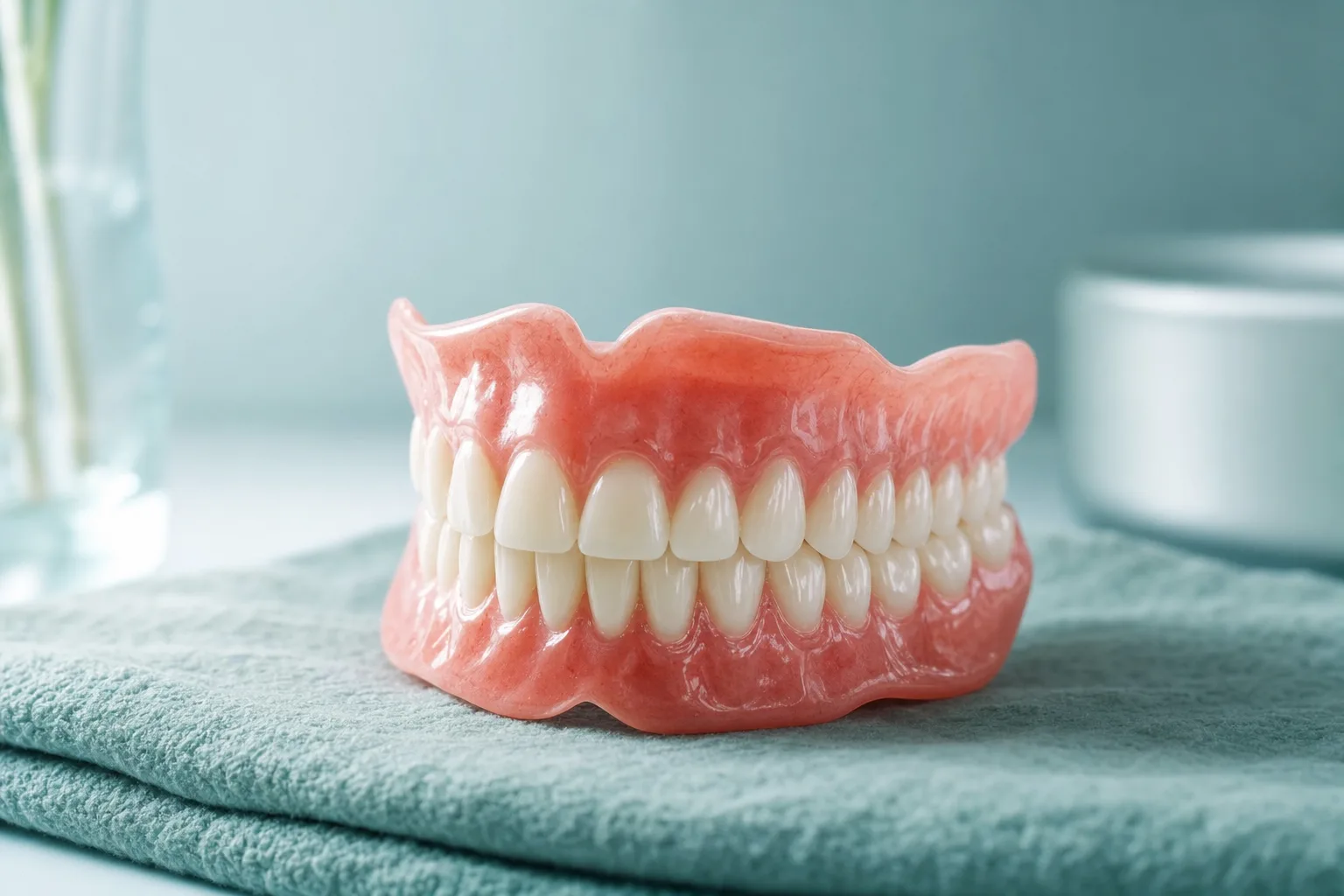
Dentures & Implants
How Many Implants Do You Need for a Lower Denture - 2 or 4?
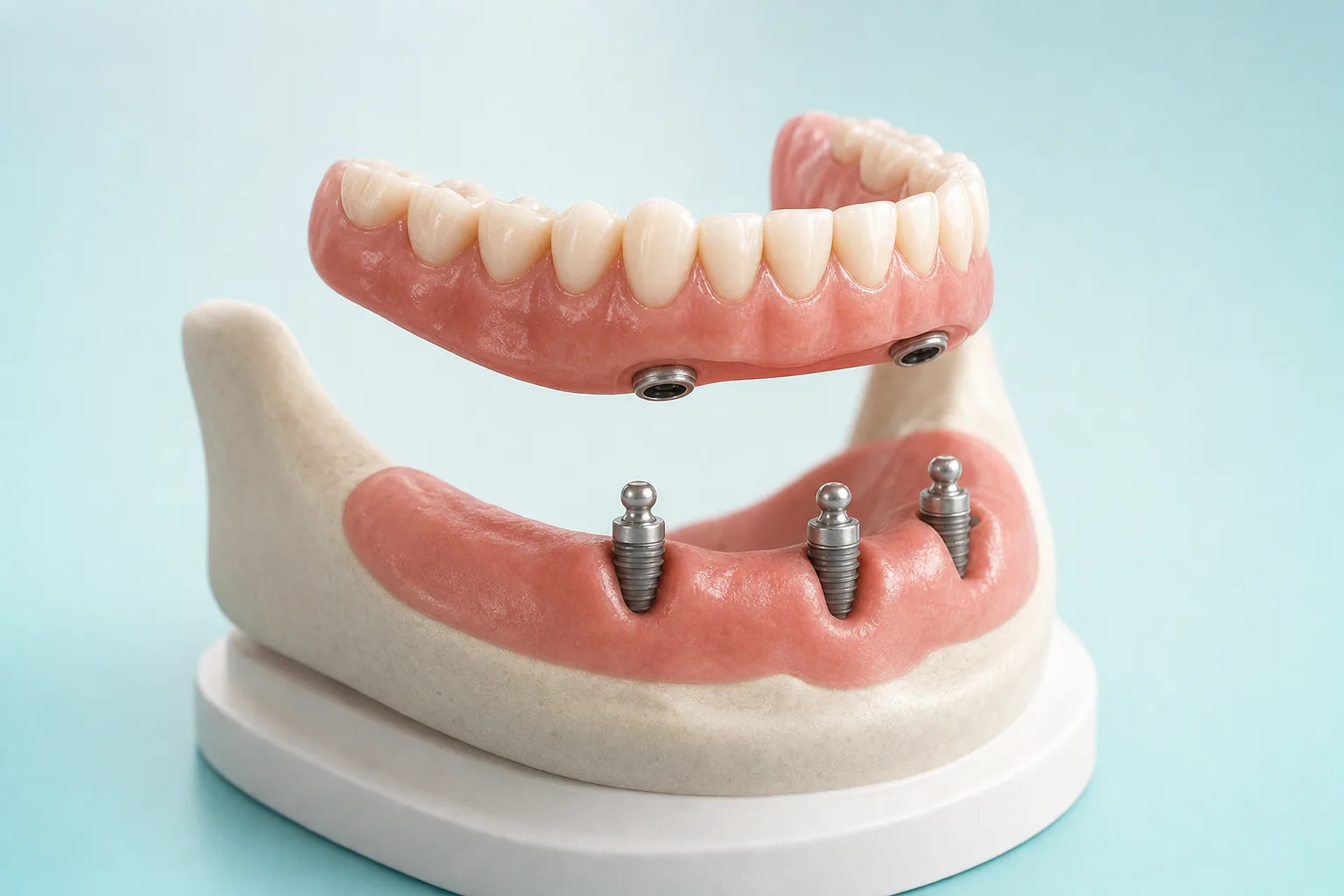
Two implants will hold a lower denture down. That is not a budget compromise or a half-measure — prosthodontic consensus has treated it as a legitimate minimum standard for the lower jaw for over two decades. So the useful question is narrower than most people think. What do the third and fourth implants actually buy, and is that worth more surgery and more parts to look after?
Is two implants enough to hold a lower denture?
Short answer: Yes. Two implants in the front of the lower jaw will stop a denture from floating and lifting, and many patients do well with exactly that. Four implants spread chewing load more evenly, largely remove the back-end rocking that two cannot, and cope better with heavy bite force — in exchange for more surgery, more cost and more attachment parts to service.
Rio Hondo Dental provides removable overdentures anchored on four implants. There are reasons for that preference and they are laid out below, alongside a fair account of what a two-implant case does well.
Why the lower denture is the one that never stays put
An upper denture has physics working for it: it covers the palate, which gives it a wide seal and genuine suction. A lower denture gets none of that. It is a horseshoe balanced on a narrow ridge with a fraction of the bearing surface, surrounded by muscle that never stops moving — tongue lifting from the inside, cheeks and lips pushing from the outside, the floor of the mouth rising with every swallow.
Then the ridge shrinks underneath it. Bone that no longer carries tooth roots stops receiving the load it was built for and resorbs, and the lower jaw generally loses volume faster than the upper. That is the mechanism behind the pattern almost every long-term denture wearer describes: it fit fine at delivery, it was loose within a few years, and each reline bought less time than the one before. A conventional full denture can be remade and refitted indefinitely, but it cannot stop the shrinking, because it never puts load into the bone.
An implant does. That is the whole argument for putting any implants under a lower denture, and it is why the debate is about how many, not whether.
The evidence behind the two-implant lower overdenture
In 2002, a group of researchers meeting at McGill University published a consensus statement concluding that an overdenture retained by two implants should be considered the first-choice standard of care for a patient with no lower teeth. A second consensus statement out of York in 2009 reached substantially the same conclusion. Neither described two implants as a discount option. They described a conventional lower denture alone as the compromise.
That framing matters, because search results for this topic almost always pit "snap-in" against a fixed full-arch bridge, which quietly casts anything removable as the consolation prize. It is not. A removable overdenture on implants is evidence-backed treatment with a long clinical track record, and the meaningful clinical decision most patients are actually facing is two implants versus four.
What the extra two implants actually buy
Less rotation at the back
Two implants placed near the canine positions create an axis. The denture is held down at those two points, but it can still rotate around the line between them, which means the back of the appliance settles onto the gum when you bite on a molar and lifts slightly when you release. That design is described as implant-retained and tissue-supported: the implants stop it floating away, the gum tissue still carries much of the chewing load.
Add two more implants further back along the arch and that lever shortens dramatically. Support spreads across four points instead of pivoting on two, and the sensation of the back end tipping largely disappears. This is the single biggest experiential difference between the two designs, and it is the one patients notice at the dinner table.
Load spread and fewer sore spots
Because a two-implant denture pushes into the tissue at the back, the ridge under the molars keeps taking pressure — which means it keeps resorbing there, and sore spots tend to show up in the same places. Spreading the load across four implants relieves the back of the ridge considerably. Adjustments do not vanish, but they usually become less frequent.
More ways to attach it
Two implants are typically fitted with individual stud-style attachments that snap into housings in the denture. Four open up the option of splinting the implants with a bar and clipping the denture onto that, which distributes force differently. Which approach fits depends on implant angles and how much vertical room there is between the ridge and your opposing teeth.
A margin for error
Implants fail occasionally, even when everything is done correctly. Lose one out of two and the case has to be rebuilt around a single anchor. Lose one out of four and, depending on which one, the denture often keeps functioning while the site is addressed. Redundancy is a real argument, and it is rarely mentioned.
2 vs. 4 implants for a lower denture, side by side
| 2 implants | 4 implants | |
|---|---|---|
| Day-to-day feel | Held firmly down; no more floating or lifting when you talk | Held down and supported; noticeably more solid under a molar bite |
| What carries the chewing load | Implants plus the gum ridge underneath | Mostly the implants, with far less pressure on the tissue |
| Rocking at the back | Some rotation is designed in; the back seats and lifts | Rotation is largely eliminated |
| Surgery | Two sites, shorter appointment | Four sites, longer appointment, usually more initial swelling |
| Bone required | Only the front of the jaw, where bone is usually best preserved | Front plus positions further back, where the ridge is often flatter |
| Grafting likelihood | Lower | Higher, since posterior sites resorb more |
| Attachment options | Usually individual stud attachments | Stud attachments or a splinting bar |
| Recurring maintenance | Two sets of wear inserts to replace; relines still expected | Four sets of inserts; relines needed less often |
| If one implant is lost | The plan usually has to be reworked | Often still functional while the site is treated |
| Cost driver | Fewer fixtures, fewer components, less surgical time | More of each; this is the main reason for the price gap |
Will a two-implant overdenture still rock when I chew?
A little, and by design. The front is locked down, so the embarrassing failures stop — it will not lift while you laugh or slide while you speak. But bite hard on something at the very back and you will feel the appliance seat into the gum, then release. Most people adapt quickly and consider it a night-and-day improvement over what they had. Some never stop noticing it.
What is not normal is movement that hurts, an attachment that feels loose within days of a service visit, or a denture that suddenly starts rocking after months of stability. Those point to a worn insert, a reline that is overdue, or a problem at an implant — and they are all fixable, but not by waiting.
Does adding implants mean more surgery and more maintenance?
Yes to both, and anyone who tells you otherwise is selling.
Four sites means a longer appointment and generally more swelling and soreness in the first few days. The recovery pattern is similar — discomfort peaking in the first 48 to 72 hours, then easing over the following week for most people — but there is simply more of it. The posterior sites are also the ones most likely to need bone grafting first, which adds healing months before implants go in at all.
On the maintenance side, the wear parts are the nylon or plastic inserts inside the denture that grip each attachment. They are consumables. They lose grip and get swapped out, and published replacement intervals vary widely — some sources quote several months, others a couple of years — because it genuinely depends on bite force, attachment type, how often the denture comes in and out, and how retentive the insert was to begin with. Four implants means four inserts on that cycle instead of two. It is a small recurring cost, but it is real, and it should be in your plan from the start rather than as a surprise in year two. Our guide to keeping implants healthy long term covers the hygiene side, which matters just as much: the abutments under the denture need brushing every day, not just the appliance itself.
The upper jaw plays by different rules
Everything above describes the lower arch. Upper jaws are a separate conversation. The bone there is generally softer, the sinuses limit height at the back, and there is no equivalent consensus endorsing two implants for an upper overdenture — most clinicians want more anchorage before considering it. If the goal is to open up the palate so food tastes normal again, more support points are usually needed, since the denture loses the suction it had been relying on.
What actually decides the number in your case
- Bone in the front of the jaw. A 3-D scan measures height and width between the nerve exits on each side. That region is often the last to resorb, which is exactly why two-implant designs place implants there.
- Bone further back. Posterior sites are where flat ridges and grafting decisions come up, and where a four-implant plan can turn into a staged one.
- What the denture bites against. A lower overdenture opposing a conventional upper denture faces far gentler forces than one opposing natural teeth or a fixed upper arch. Heavier opposition argues for more support.
- Grinding and clenching. A strong parafunctional habit chews through attachment inserts faster and loads implants harder.
- Your hands. Seating a denture onto four attachments takes more control than two. Arthritis, tremor or limited grip strength genuinely belongs in this decision, and it is almost never asked about.
- Budget and sequencing. Some plans start with two and add more later. Whether that is practical depends on where the first two were placed, so it has to be planned from the beginning rather than improvised.
What can delay or rule out implant support
Not everyone is a candidate on day one, and a good consultation says so early. Insufficient bone volume is the most common obstacle, and it is usually a delay rather than a refusal — grafting, then healing, then placement. Uncontrolled diabetes, active infection in remaining teeth and current heavy smoking all raise failure risk enough to be addressed first; smoking in particular is associated with a substantially higher implant failure rate in the published literature. Intravenous antiresorptive medication and a history of radiation to the jaws call for medical coordination before anything is planned.
Age by itself is not on that list. The American Dental Association's patient resource, MouthHealthy, frames candidacy around general health and healing capacity rather than a number on a birth certificate.
Get seen urgently if… the gum around an implant is swollen, tender or bleeds when touched; an implant post feels loose or moves; you have facial swelling or fever; or a sore spot under the denture has not healed within about two weeks. Inflammation around an implant can progress to bone loss quietly, and a loose fixture never tightens up on its own. Call (562) 928-5559.
Is a removable overdenture a downgrade?
No, and the assumption that it is comes from marketing rather than clinical reasoning. A removable design has real advantages: you can lift it out and clean directly around every implant, which is the hardest thing to do well under a fixed prosthesis; the flange restores lip and cheek support that a fixed bridge often cannot; repairs are far simpler; and it takes fewer implants, which keeps the treatment reachable for more people.
The honest drawbacks, stated plainly: you take it out at night, which some people never make peace with. It still covers the ridge, so it feels bulkier than natural teeth. The inserts wear. Relines are still part of life, because the bone under the tissue-borne portions keeps changing. And it is a prosthesis — an excellent one, but you will know it is there. If you want to compare the whole category against fixed options, our breakdown of implants versus dentures and the overview of how dental implants work are the places to start.
The sequence, start to finish
- Exam and 3-D scan. Bone height and width measured, nerve position mapped, implant positions planned before anything is scheduled.
- Preparatory work, if needed. Extractions, treatment of gum infection, or grafting. Grafting adds months, not weeks.
- Implant placement. One appointment. Sedation is available if that is what has kept you away.
- Healing. The implants fuse with bone over a period commonly measured in months, varying with bone quality and whether grafting was done. You are not left without teeth meanwhile.
- Attachments and fitting. Housings are seated in the denture and retention is adjusted so it holds without being a wrestling match to remove.
- Follow-up. Early adjustments for sore spots, then periodic checks on the implants, the inserts and the tissue-side fit.
What to ask before you agree to a number
- How much bone do I have in the back of the ridge, and does a four-implant plan require grafting there?
- Is this plan implant-retained, implant-supported, or somewhere between — and how much movement should I expect at the back?
- Which attachment system are you using, and how often do the inserts typically need replacing?
- If we start with two, can more be added later without redoing the denture?
- What is on the written estimate, and what is not — the implants, the abutments, the attachments, the denture itself, the follow-ups?
That last one is where quotes diverge most. Implant count is only one cost driver; grafting, the attachment system, whether the denture is new or an existing one is converted, and lab work all move the total. Our post on what implant treatment costs and how insurance handles it covers the moving parts, and CareCredit, Cherry and Sunbit are available if the plan needs to be spread out. We also accept most PPO and HMO plans along with Denti-Cal and Medi-Cal, and coverage often treats the denture and the implants very differently — worth asking about specifically.
Get an answer for your own jaw
The right number of implants is not a preference, it is a measurement — and it takes a scan and an exam to make it. Dr. Sameer Aljanedi will show you what your bone looks like and explain why two or four makes sense for your case. Our team is bilingual, se habla español. Book a consultation or call (562) 928-5559.
Have questions about your smile?
Dr. Sameer Aljanedi and the team at Rio Hondo Dental Office are here to help. Se habla español.