Dental Implants
Dental Implants vs. Dentures: Which Is Right for You?
When you're missing several teeth — or staring down the loss of the ones you have left — the choice usually comes down to two paths: dental implants or dentures. Both can give you back a smile and the ability to eat and speak with confidence, but they get there in fundamentally different ways, and the "right" answer is genuinely personal. Here's a clear, no-sales-pitch comparison to help you and Dr. Sameer Aljanedi land on the option that fits your mouth, your health, and your budget.
The short version
- Implants become part of your jaw and stay put; dentures rest on the gums and can shift.
- Implants preserve jawbone and restore more bite force; dentures cost less up front but need periodic relining.
- Implant-supported "snap-in" dentures and overdentures on four implants are middle paths that combine stability and value.
- The right choice depends on your bone, health, budget, and timeline — a 3-D scan tells us which fits.
How each one actually works
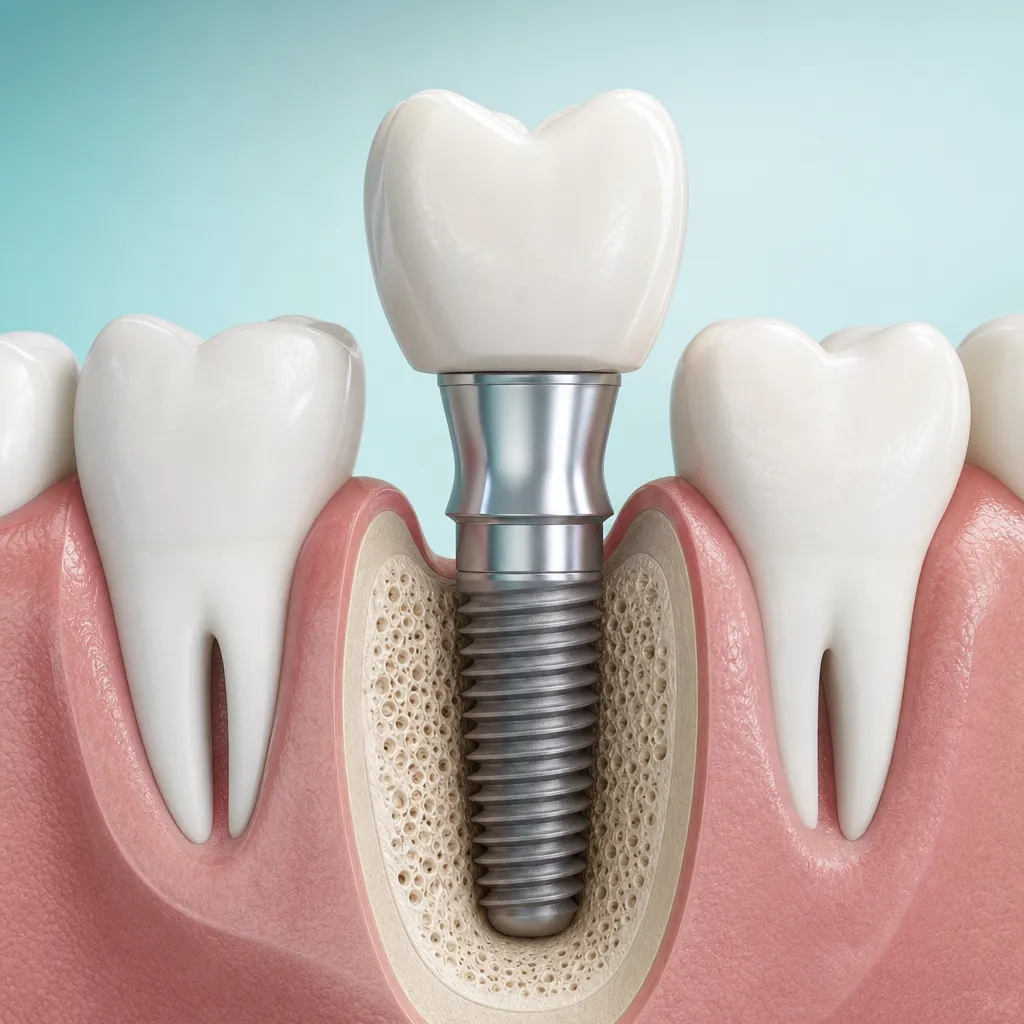
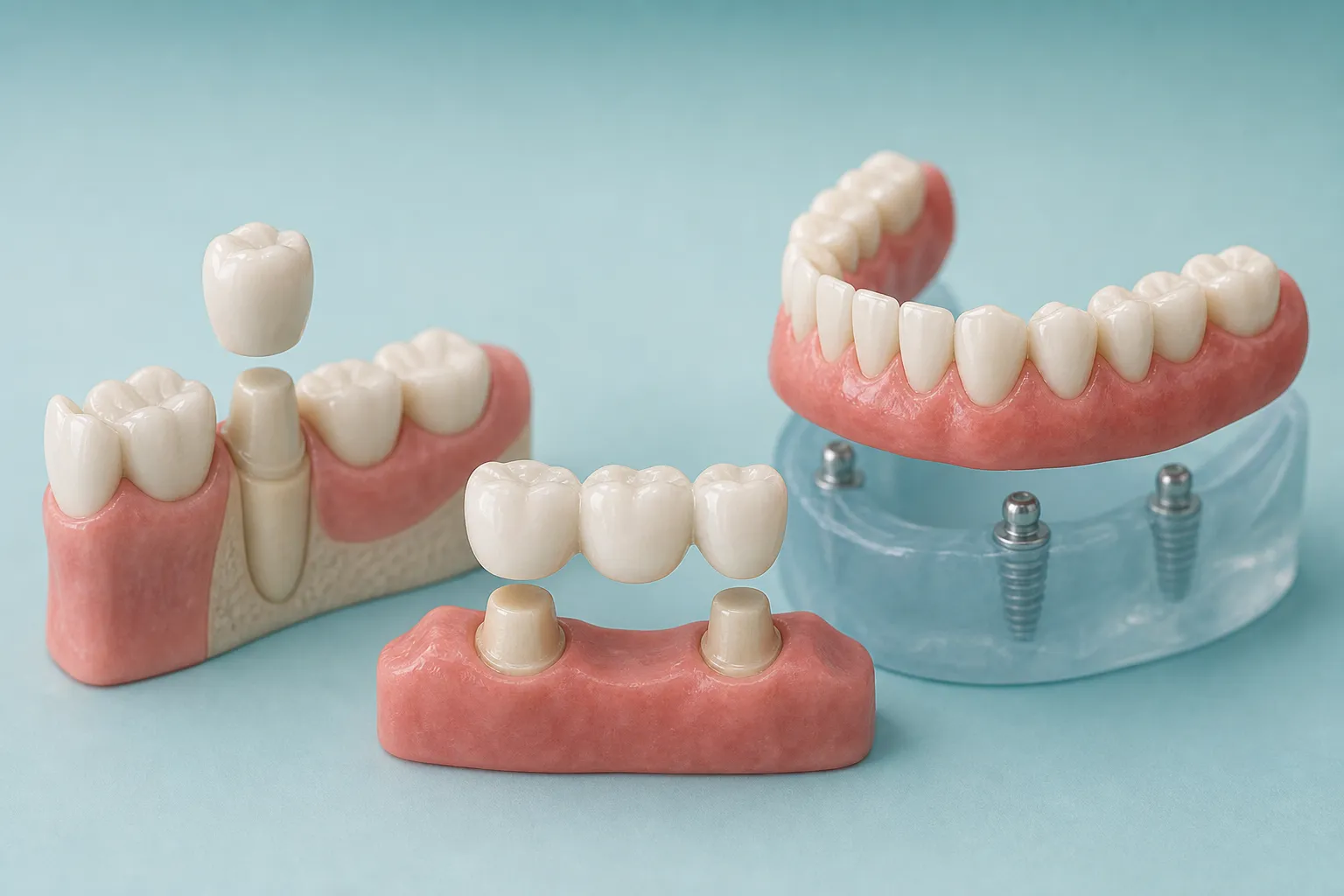
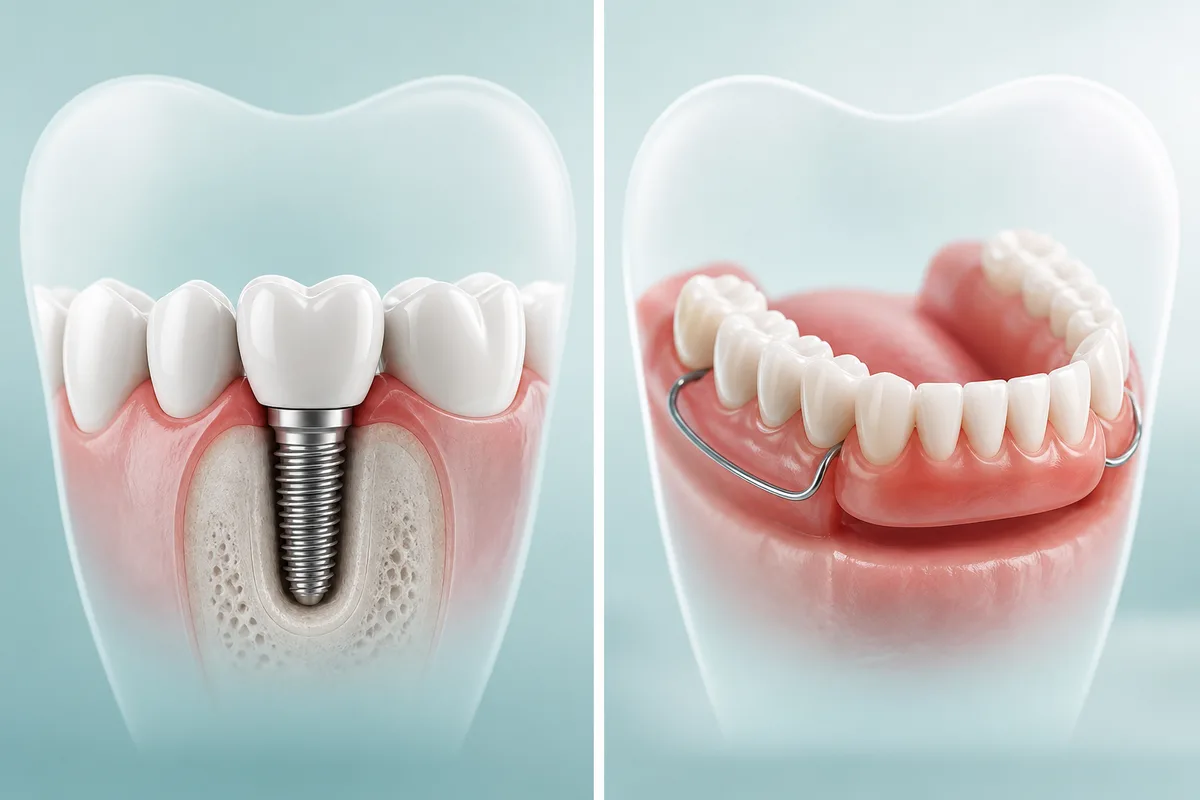
Dentures are removable appliances that rest on the gums; partial dentures clasp onto the teeth you still have. Dental implants are small titanium posts placed into the jawbone, where they fuse with the bone over a few months and act as artificial tooth roots. Those posts then anchor a crown, a bridge, or a full arch of teeth that stays put. The core difference is that one sits on top of your gums, and the other becomes part of your jaw.
Comparing the things that matter day to day
- Stability. Implants don't move — no slipping at dinner, no adhesives, no clicking when you laugh. A traditional lower denture in particular can be frustratingly loose because there's less ridge to hold it.
- Bone health. This is the big one people don't expect. Implants stimulate the jawbone the way natural roots do and help preserve it; dentures don't, so the bone beneath them slowly shrinks, which is what gives long-term denture wearers that "sunken" look and a looser fit over time.
- Eating. Implants restore far more of your natural bite force — steak, apples, corn on the cob are back on the menu. Dentures handle softer foods more comfortably.
- Longevity. Implants are designed to last many years, often decades. Dentures typically need relining or remaking every several years as the gums and bone change shape under them.
- Up-front cost. Dentures cost less to start — a real advantage if budget is the deciding factor. Implants cost more initially but can be more economical over a long horizon because they last and protect bone.
- Daily care. Implants are brushed and flossed like natural teeth; dentures come out nightly for cleaning and soaking.
You don't have to choose either extreme
This is the part most people don't realize. Implant-supported (snap-in) dentures attach to just two to four implants, giving you dramatically more stability than a traditional denture at a fraction of the cost of replacing every tooth individually — a popular middle path, especially for a lower denture that won't stay put. And for those who want a permanent, fixed set of teeth that comes closest to natural, overdentures on four implants restore an entire arch on as few as four to six implants.
What the journey looks like
People often picture the worst and put off the conversation, so it helps to know the path. A denture is the faster route — impressions, a few fittings, and you have a working set of teeth in a handful of weeks. Implants are a longer, staged process: a consultation with 3-D imaging, placement of the posts, a healing period of a few months while the bone fuses to them, and then the final teeth. It asks for more patience, but the payoff is a result that feels and functions much more like your own teeth. We map out the exact timeline, number of visits, and costs at your consultation so there are no surprises — and either path can usually be made comfortable with sedation if you're anxious.
So which is right for you?
It depends on a handful of factors: how much jawbone you have, your overall health and healing, how much you value a fixed solution versus a lower up-front cost, and your timeline. Some patients are textbook implant candidates; others do beautifully with a well-made denture or a hybrid. The only way to know is a thorough exam, usually with 3-D imaging. You can read more on our dental implants and prosthodontics pages, and we accept most PPO and HMO plans plus Denti-Cal and Medi-Cal, with financing to make either path manageable.
Common questions from Downey patients
Am I too old for implants? Age itself is rarely the deciding factor — overall health and bone quality matter far more, and many older adults are excellent candidates.
What if I've already lost a lot of jawbone? Bone grafting can often rebuild enough support, and an overdenture on four implants is specifically designed to make the most of available bone. We'll know after a 3-D scan.
Can I convert my existing denture to snap onto implants? Frequently, yes — we can often retrofit or remake a denture to clip onto new implants for a big jump in stability.
Do implants ever fail? They have a high long-term success rate, but smoking, uncontrolled diabetes, and poor hygiene raise the risk. Good home care and regular checkups are what keep them healthy for decades.
Ready to compare your options in person, with no pressure? Schedule a consultation with our Downey implant team today. Se habla español.
Have questions about your smile?
Dr. Sameer Aljanedi and the team at Rio Hondo Dental Office are here to help. Se habla español.