Insurance & Costs
What a Written Dental Implant Estimate Should Itemize
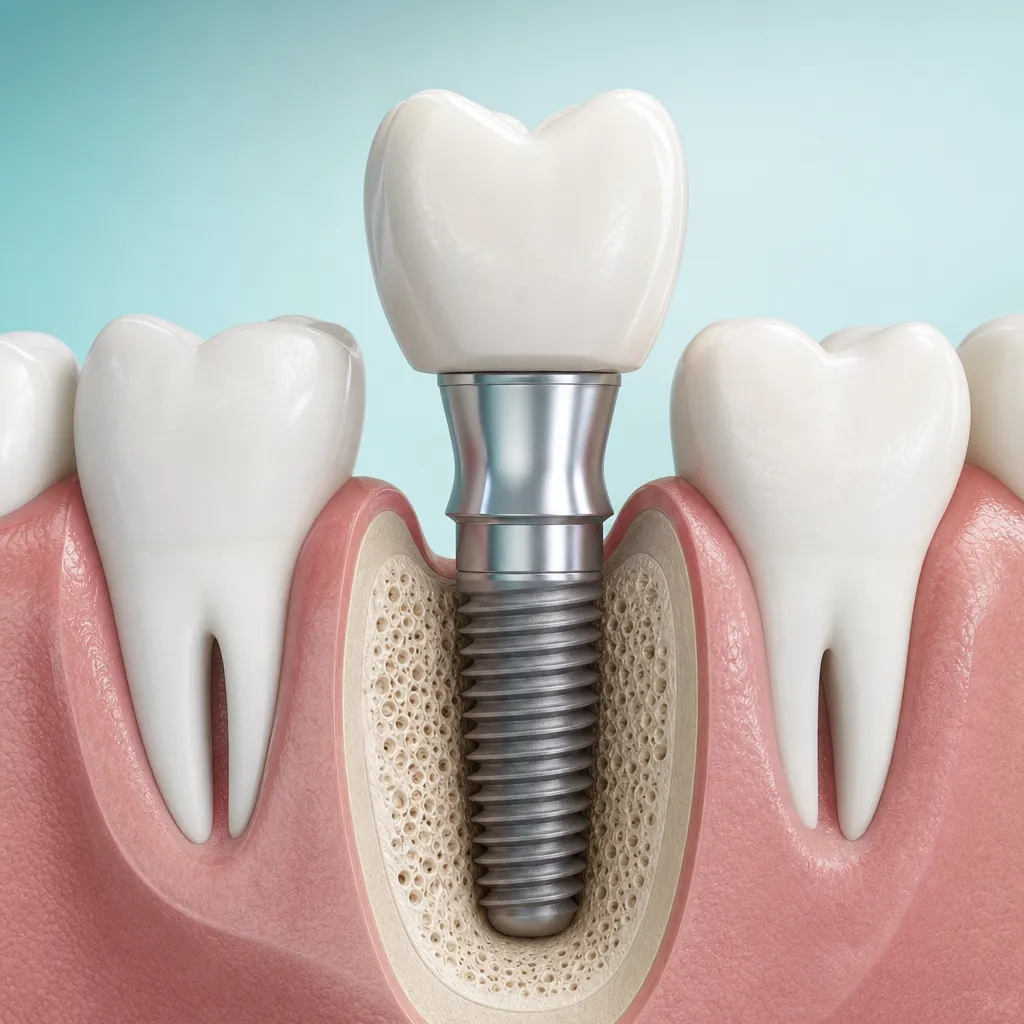
An advertised "$999 dental implant" is usually a real price for a real thing. It is just not a tooth. That figure buys the titanium post that goes into the bone. The connector that screws into it and the crown you actually chew with are billed separately, and together they normally cost more than the post did.
Which is how a quote comes back at four or five thousand dollars after a mailer said nine hundred. Most of that confusion evaporates the moment someone breaks the plan into line items — and you are allowed to ask for exactly that before you sign anything.
Why is my implant quote so much higher than the advertised price?
Short answer: Advertised implant prices nearly always cover the surgical fixture alone. A finished tooth needs three separate components — the implant, the abutment and the crown — plus 3D imaging, and often an extraction, a bone graft or sedation. Itemized from start to finish, one complete implant commonly runs several times the headline number.
That is not automatically a bait and switch. The fixture genuinely is its own procedure, with its own billing code, frequently placed months before the crown and sometimes by a different clinician entirely. The problem is that an ad quotes one line out of a plan that has eight, and nobody tells you which line. Our page on tooth replacement with dental implants covers the treatment itself. This article is about the paperwork.
One tooth, three components
An implant-supported tooth is an assembly, not a single object:
- The fixture. The threaded titanium post placed into the jawbone. It integrates for roughly three to six months while bone grows against the surface.
- The abutment. The connector that screws into the fixture and passes through the gum. It can be a stock part or milled specifically for your case, and those two are not priced alike.
- The crown. The visible tooth, made by a dental lab, either screwed into the abutment or cemented over it.
A trustworthy estimate lists all three separately, because they happen at different appointments and are sometimes billed by different offices. If you were referred out for the surgery and back to your general dentist for the crown, you may be holding half a plan without realizing it. Ask plainly whether the number in front of you carries through to a finished tooth or stops at the surgical phase.
Line items that belong on a written implant treatment plan
The figures below are published third-party ranges commonly cited for the greater Los Angeles area. They are not our fees, and nobody — including us — can price your case honestly without looking at a scan first. Use them to check whether a plan you have been handed is missing whole categories, not to predict your total.
| Line item | What it covers | Commonly published area range | Needed? |
|---|---|---|---|
| 3D cone beam scan (CBCT) | Maps bone volume, nerve position and sinus floor before anyone commits to surgery | $150–$500 | Nearly always |
| Extraction of the failing tooth | Removing the tooth the implant will replace | $150–$400 simple; more if surgical | Only if the tooth is still there |
| Socket preservation graft | Bone graft packed into the socket at extraction so the ridge does not collapse while you heal | $400–$1,200 | Often, when placement is delayed |
| Ridge augmentation or sinus lift | Rebuilding height or width when there is not enough bone to hold a fixture | $1,500–$3,000+ | Only when imaging shows a deficit |
| Implant fixture and surgical placement | The post itself plus the surgery to place it — this is the line the ads quote | $1,500–$3,000 | Yes |
| Healing abutment or second-stage uncovering | Exposing the implant and shaping the gum once it has integrated | $200–$500 | Usually |
| Abutment | The connector between fixture and crown; stock or custom-milled | $400–$1,000 | Yes |
| Implant crown | The lab-fabricated tooth | $1,000–$2,500 | Yes |
| Sedation | Nitrous oxide, oral sedation or IV, usually priced by time | $50–$150 nitrous; several hundred and up for IV | Optional |
| Temporary tooth during healing | A flipper or bonded temporary so you are not without a front tooth for months | $300–$800 | Matters for front teeth |
| Follow-ups and verification X-ray | Suture removal, integration checks, the film that confirms the crown seated fully | Frequently bundled | Should be stated either way |
Total those and you land roughly where a complete single implant lands in an expensive metro. Grafting and sedation are the two items most likely to move it, and they are also the two most likely to be left off a quote given over the phone.
What actually drives the number up
Bone, more than anything else
Bone volume is the single biggest variable in implant pricing, and it is invisible without imaging. A tooth extracted last month usually leaves a socket that can be grafted cheaply. A tooth lost eight years ago may have left a ridge too narrow to hold a fixture at all, and rebuilding it is a separate surgery with its own healing period. Our guide to bone grafting before implant placement explains which situation calls for which technique.
Here is the part most estimates handle badly. Some grafting decisions genuinely cannot be made until the socket is open and the surgeon can see it. An honest plan says so in advance and names the contingent fee — "if additional grafting is required at the time of surgery, add $X" — instead of surprising you at checkout. A plan that stays silent about it is not necessarily hiding anything, but you should raise it yourself.
Which implant system you are getting
Fixtures are not interchangeable. Components are proprietary to the manufacturer, so the brand you receive today determines whether a dentist five years from now can order a matching abutment or replacement screw when something needs service. That name belongs in writing on your estimate. It is a fair question and no reasonable office will bristle at it.
Stock versus custom abutment, screwed versus cemented
A custom abutment is milled to your gum contours and costs more than an off-the-shelf one; on a front tooth that difference shows. Separately, a screw-retained crown can be unscrewed and reseated later, while a cemented crown generally cannot be removed without destroying it — and excess cement left below the gumline is a well-documented cause of inflammation around implants. Neither approach is wrong. The estimate should simply state which one you are buying, along with the crown material.
One tooth versus a whole arch
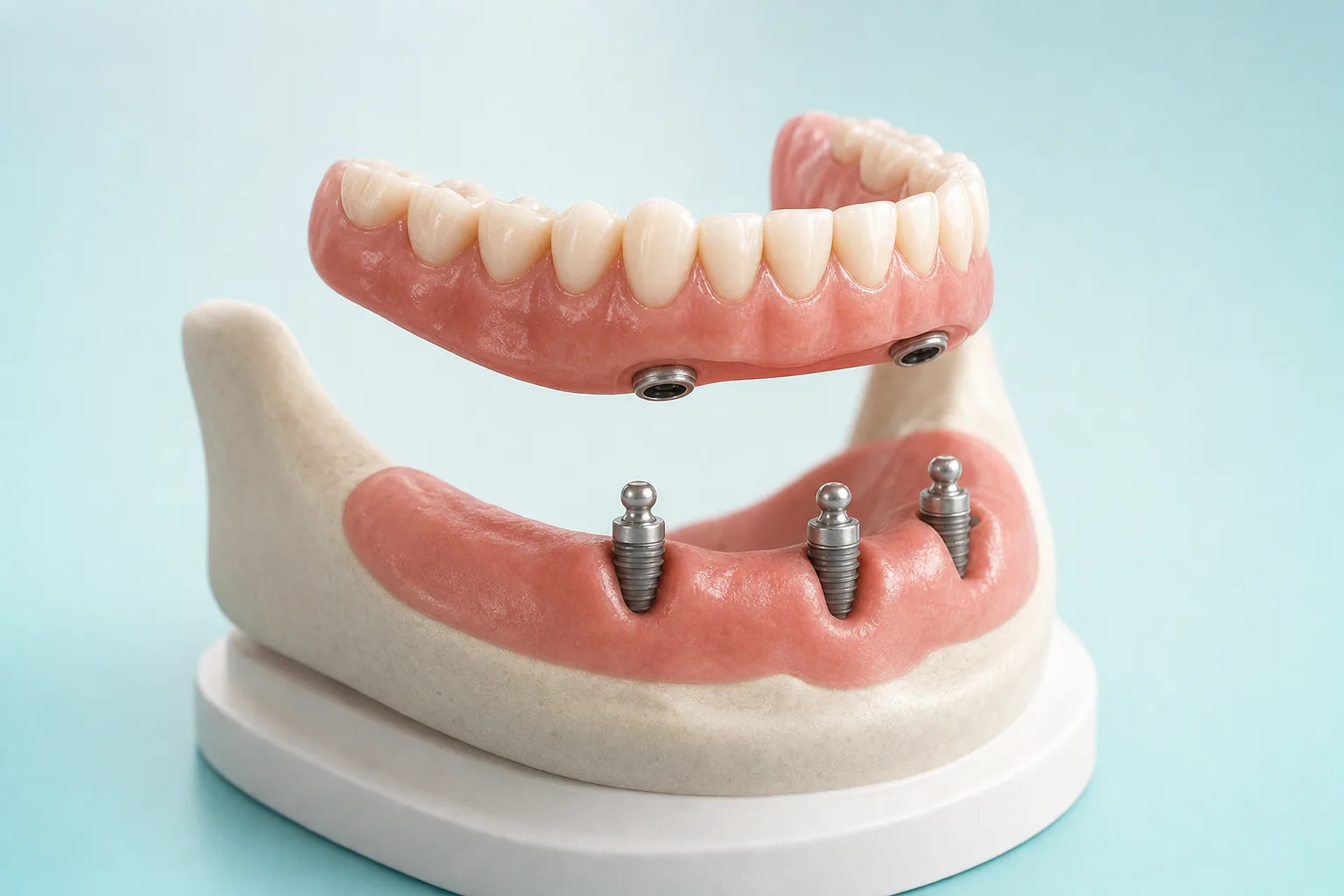
Full-arch estimates are structured differently and should never be compared line-for-line against a single-tooth quote. If most of an arch is failing, a removable overdenture retained by four implants is a different treatment with a different fee schedule — fewer crowns, a prosthesis instead, and attachment inserts that get replaced periodically as an ongoing cost. Ask which structure your plan is written in before you compare it to anything.
So what does a "$999 dental implant" actually include?
In most cases, the fixture and its placement on a straightforward site. That price typically excludes the scan, the extraction, any grafting, the abutment, the crown and sedation. Sometimes it applies only to the first implant, or only to one particular system, or only when no grafting is needed.
None of that is dishonest if it is disclosed. So make the offer disclose itself with one sentence: what is the all-in written price for a finished tooth under this promotion, and what would make it change? Any genuine offer survives that question. We list whatever we are currently running on our current offers page, and any promotion applies as a stated line on the itemized plan rather than as a number that shifts later.
Red flags on an implant estimate
- A single lump sum with no line items, or a plan that names only "implant" and a price.
- A firm quote given before anyone has taken a 3D scan.
- No abutment or crown listed anywhere, on a plan meant to replace a tooth you chew with.
- No implant manufacturer named.
- An insurance figure presented as settled rather than estimated.
- A discount that expires if you leave the building to think about it.
- No stated position on what happens if the implant fails to integrate — ask who pays for the replacement fixture, and get the answer in writing.
Get seen urgently if… the tooth you are planning to replace is actively infected — throbbing pain, a gum boil, facial swelling, or fever. Comparing quotes for three weeks with an untreated infection in your jaw is not a cost-saving strategy. Swelling that spreads toward the eye or under the jaw, or any trouble swallowing or breathing, is an emergency room visit now.
How insurance changes the estimate — and what the numbers mean
The "estimated insurance portion" on a treatment plan is your office's best prediction, not a commitment from your carrier. Four plan mechanics quietly reduce it: a missing-tooth clause excluding teeth lost before the policy started; a waiting period on major services; an annual maximum that a single implant can exhaust on its own; and an alternate-benefit provision that pays toward a bridge or partial denture instead and bills you the difference.
The fix is a predetermination — your dentist submits the plan and the carrier writes back with what it will actually allow before treatment begins. It takes a few weeks and it is worth the wait on a case this size. Our breakdown of how HMO and PPO plans differ on major work is a useful companion here.
Denti-Cal and Medi-Cal are a separate conversation. Implants are not a routine adult benefit, and where they are considered at all it runs through prior authorization in narrow, documented circumstances. What the program does commonly cover is tooth replacement by other means — complete and partial dentures, relines and repairs. Many patients take the covered option now and revisit implants later as self-pay. We accept Denti-Cal and Medi-Cal along with most PPO and HMO plans; our Denti-Cal and Medi-Cal page has the current details. For the balance, we work with CareCredit, Cherry and Sunbit, and our in-house membership plan is built for patients without insurance at all. If you want published cost context specific to this area, our post on what implants cost around Downey goes deeper.
Four questions to take to the consultation
- Is this quote for a finished tooth, or for the surgical phase only? If the crown is billed by a different office, ask for that estimate too before you compare anything.
- Which line items could still change, and by how much? Grafting is the usual answer. A named contingent fee is a good sign; vagueness is not.
- What implant system are you placing, and is the abutment stock or custom? This determines who can service the implant years from now, and it should be written down.
- How long is this estimate honored, and what is included afterward? Follow-up visits, the verification X-ray and the fee if the fixture does not integrate all belong in the answer.
Write those four down. An office that answers them without hesitation is an office that has thought about your case rather than run you through a template. The American Dental Association's patient library at MouthHealthy is a reasonable neutral reference if you want to read up on the procedure before you go.
Bring us the quote you already have
If you are holding an estimate you do not fully understand — from anywhere, including a clinic abroad — Dr. Sameer Aljanedi will take a scan, go through it line by line with you, and put our own itemized plan in writing before anything is scheduled. Our Downey team is bilingual and se habla español. Book a consultation or call (562) 928-5559.
Have questions about your smile?
Dr. Sameer Aljanedi and the team at Rio Hondo Dental Office are here to help. Se habla español.