Oral Health
Wisdom Teeth in Your Teens & 20s: When Removal Makes Sense
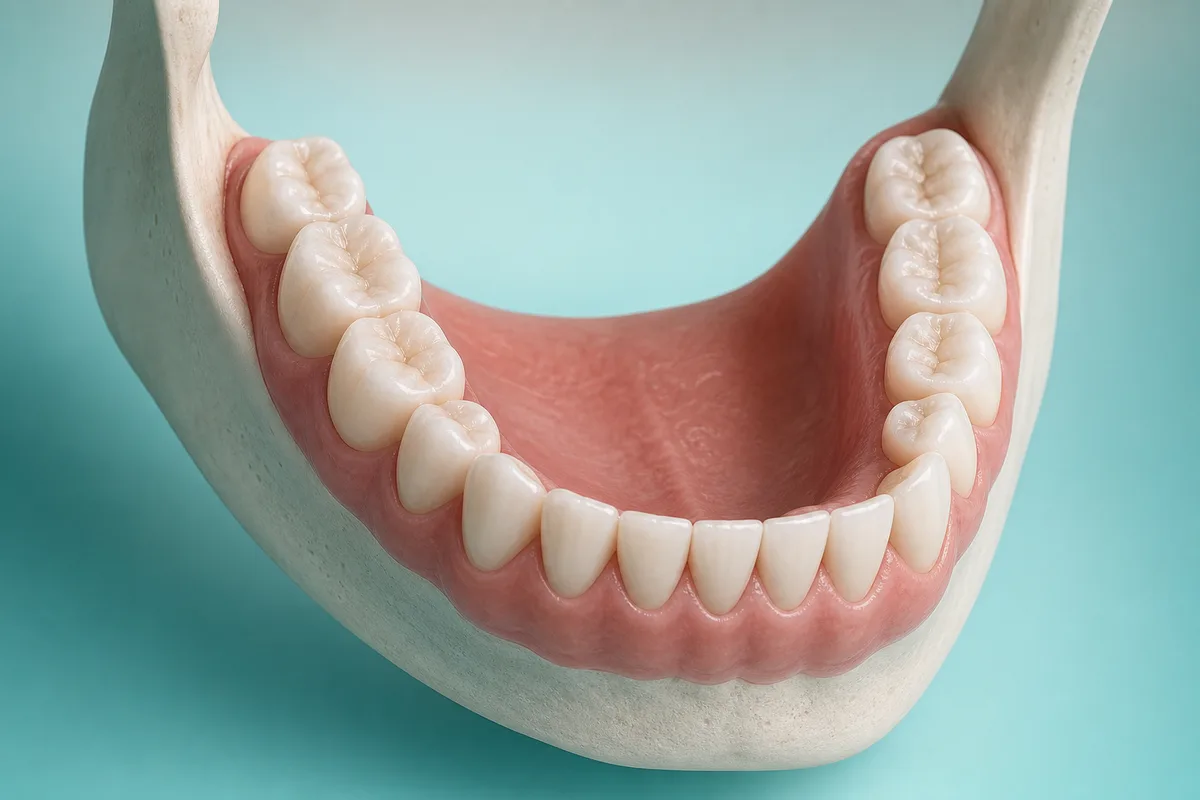
Wisdom teeth tend to arrive at the busiest possible moment — the late teens and early twenties, right around graduations, first jobs, and college. They're the third and final set of molars, and human jaws have gotten smaller over the millennia while the teeth didn't get the memo. For some lucky people they come in straight and useful. For many, there's simply no room. The question every Downey family asks is the right one: do they actually need to come out, or can you leave them be?
The short version
- Wisdom teeth do not automatically need removal — healthy, well-positioned, cleanable ones can stay.
- Removal makes sense for impaction, crowding, recurring infection, decay you cannot reach, or cysts.
- Watch for aching at the back of the jaw, swelling behind the last molar, or a bad taste.
- Earlier removal in the teens and twenties is often simpler, with quicker recovery.
- Plan it around school breaks, and ask about sedation if you feel anxious.
The myth worth busting first
No, wisdom teeth do not automatically need to be removed. If a wisdom tooth is healthy, fully erupted into a useful position, biting properly against the tooth above or below it, and reachable with a toothbrush and floss, it can stay — and we'll happily monitor it. The decision should be based on evidence, not a blanket policy. That's exactly why we track wisdom teeth with periodic exams and X-rays as they develop, rather than scheduling everyone for surgery on principle.
When removal genuinely makes sense
- Impaction. The tooth is trapped under the gum or bone and can't erupt properly, often tilting forward into the molar in front of it.
- No room. The tooth crowds its neighbors as it tries to come in.
- Recurring infection. A partially erupted wisdom tooth leaves a flap of gum that traps food and bacteria, causing painful, repeating infections (pericoronitis) that flare and fade.
- Decay or gum disease you can't manage. When a tooth sits so far back that you simply can't keep it clean, cavities and gum problems become a question of when, not if.
- Cysts or damage to neighboring teeth or bone, which an X-ray can reveal long before you feel anything.
Signs your wisdom teeth are talking to you
Pay attention to aching or pressure deep at the back of the jaw, gums that are red and swollen behind your last molar, a bad taste or odor coming from that corner of your mouth, difficulty opening wide, or a soreness that comes and goes every few weeks. Pain that arrives with facial swelling is your cue to be seen promptly — an infected wisdom tooth can escalate, and our emergency dental team can help when it flares.
Why dentists often suggest "sooner rather than later"
If removal is in the cards, there's a real advantage to the teen and young-adult years. At that age the roots aren't fully formed and the surrounding bone is more flexible, which generally makes the procedure more straightforward and recovery quicker. Wait until your thirties or forties — when roots are long and the bone is dense — and the same extraction tends to be more involved, with a higher chance of complications. Monitoring early is what turns timing into a choice instead of a 2 a.m. emergency.
What recovery actually involves
Most people take it easy for three to five days: soft foods, cold compresses on the cheek, rest, and careful attention to the post-op instructions — no straws or vigorous rinsing for the first day or two, which helps you avoid a painful "dry socket." Swelling and tenderness usually peak around day two and then steadily fade. If the thought of the procedure makes you tense, ask about our sedation options for a calmer experience.
Planning around school and work
Because wisdom teeth so often come due during the school years, timing the procedure is half the battle for families. Winter break, spring break, and the start of summer are popular windows precisely because they give a few quiet days to recover without missing class or a big exam. If you're a student athlete, plan around your season; if you're starting a new job, the front of a long weekend works well. We'll talk through the recovery timeline at your evaluation so you can pick a date that fits your life rather than disrupts it — and stock up on the soft foods and supplies ahead of time so the first 48 hours are easy.
Common questions from Downey patients
Can I keep wisdom teeth that don't hurt? Sometimes — but "no pain" doesn't always mean "no problem," since decay and cysts can be silent. An X-ray tells us whether they're truly fine to leave alone.
How long until I'm back to normal? Most people return to school or work within a few days, with full healing of the sockets over a few weeks.
Do they all have to come out at once? Not necessarily. We remove what needs to go and can plan it in stages if that's a better fit for you.
Is it covered by insurance? Medically necessary removal is often covered in part. We accept most PPO and HMO plans plus Denti-Cal and Medi-Cal, and we'll give you an estimate up front.
Curious whether your wisdom teeth are fine or quietly heading for trouble? Book an evaluation with Dr. Sameer Aljanedi in Downey — you'll get a straight answer, not scare tactics. Se habla español.
Have questions about your smile?
Dr. Sameer Aljanedi and the team at Rio Hondo Dental Office are here to help. Se habla español.