Oral Health
The Sinus–Tooth Connection: Why Allergy Season Causes Tooth Pain in Downey
Every spring, the same patient story walks through our door: the upper back teeth ache, sometimes several at once, and it started right around the time the pollen count in the San Gabriel Valley took off. They're bracing for bad news about a cavity. Often, the real culprit isn't a tooth at all — it's the sinuses sitting right above them. Knowing the difference can save you a lot of worry, and occasionally an unnecessary appointment.
The short version
- Your upper back teeth sit just below the sinuses, so allergy-season congestion can feel exactly like a toothache.
- Sinus pain usually affects several upper teeth at once and worsens when you bend over or lie down.
- A real toothache tends to be one tooth, with sharp pain to hot, cold, or sweets.
- Southern California's long allergy season makes spring tooth aches common — and they often fade as your nose clears.
- Saline rinses, steam, hydration, and decongestants typically ease both the congestion and the ache.
- See a dentist if the pain narrows to one tooth, lingers after congestion clears, or comes with swelling.
- Tap gently on the sore upper teeth — if several feel tender, sinuses are the likely cause.
- An infected upper molar can occasionally inflame the sinus above it, so one-sided aches deserve a look.
- Sudden, severe pain or facial swelling is a reason to be seen right away.
The anatomy nobody tells you about
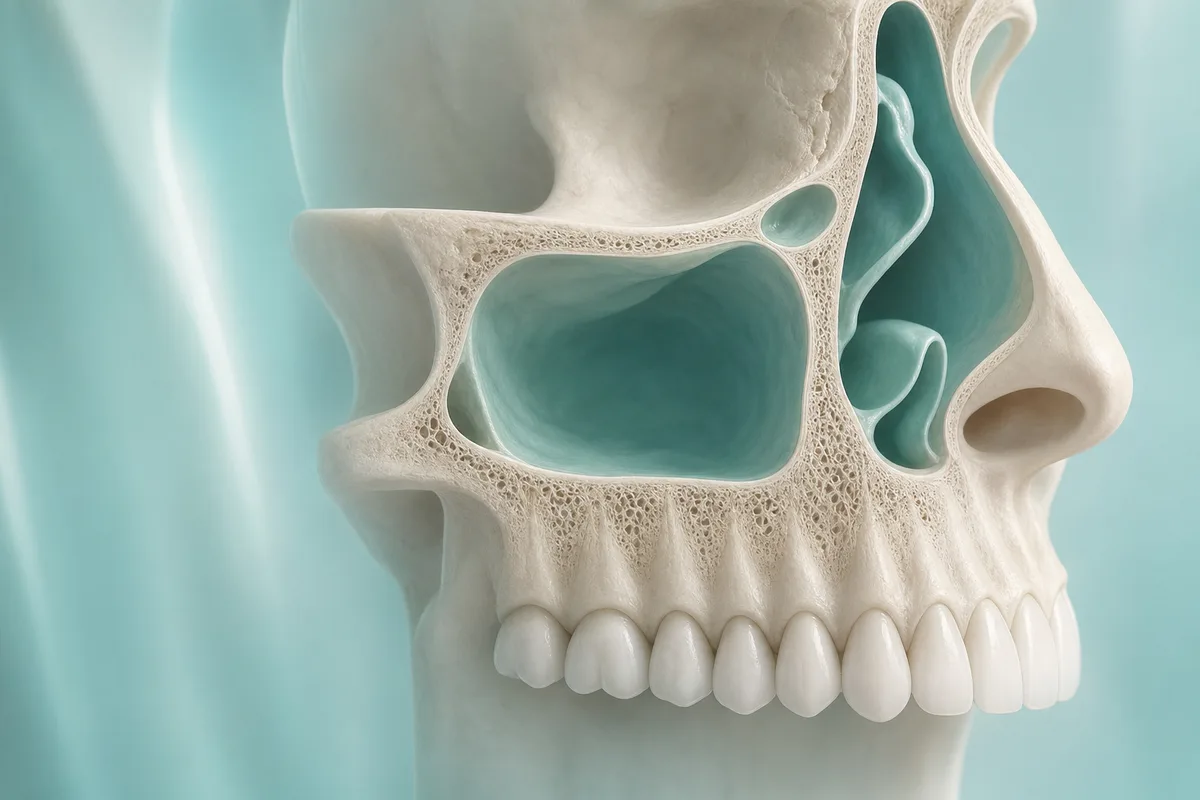
Your two largest sinuses — the maxillary sinuses, one in each cheek — sit directly above the roots of your upper molars and premolars. In many people, only a paper-thin layer of bone separates the sinus floor from those tooth roots; in some, the roots actually poke up into the sinus space. So when allergy season or a cold inflames and congests those sinuses, the pressure presses down on the same nerves that serve your upper teeth. Your brain can't always tell the signals apart, and the result feels exactly like a toothache — typically a dull ache across several upper teeth rather than one sharp, pinpoint pain.
Sinus ache or real toothache? A quick self-test
- Points toward sinuses: several upper teeth ache together; it's worse when you bend over, lie down, or jog down stairs; you also have congestion, facial pressure, or a recent cold; the ache shifts or throbs when you move your head; both sides may be involved.
- Points toward a tooth: one specific tooth hurts; sharp pain to hot, cold, or sweets; throbbing that wakes you at night; pain when you bite on that tooth; swelling of the gum or face nearby.
A useful trick: tap gently on the suspect upper teeth. If several feel tender and your cheeks feel full, sinuses are the likely cause. If one tooth lights up sharply, that points to a dental problem.
Why Downey's spring hits so many people
Southern California doesn't get a hard winter freeze, so our allergy season starts early and runs long — tree pollen in late winter and spring, then grasses, layered on top of the everyday dust and traffic particulates of the LA basin. For a lot of locals, that means weeks of low-grade sinus congestion rather than a single bad cold, and that steady pressure is exactly what produces a nagging, comes-and-goes ache in the upper teeth. If your "toothache" shows up every spring like clockwork and fades when your nose clears, the calendar is telling you something.
What helps at home
If it's sinus pressure, the same measures that clear your head usually quiet the tooth ache: stay well hydrated, use a saline rinse, apply a warm compress over your cheeks, breathe in steam from a hot shower, and consider an over-the-counter decongestant or antihistamine if it's appropriate for you. As the congestion drains over a few days, the tooth discomfort typically eases right along with it. If your teeth feel better the moment your nose clears, you've found your answer.
When it's time to call the dentist
Get it checked if the pain narrows down to one tooth, lingers after your congestion has cleared, or arrives with swelling, sweet sensitivity, or a sharp jolt to temperature. Those are the signatures of a real dental problem — decay, a cracked tooth, or an infection that may need a filling, a crown, or root canal therapy. And if pain comes on suddenly and severely, or your face starts to swell, don't wait it out — our emergency dental team can see you quickly. A genuine infection only gets worse with time.
Common questions from Downey patients
Can a sinus infection cause tooth pain for weeks? Yes — as long as the sinus stays inflamed, the pressure on those nerves continues. If it drags on, see your physician and your dentist so nothing gets missed.
How will you tell which it is? A focused exam, tapping and temperature tests on the suspect teeth, and sometimes an X-ray usually sort it out in a single visit.
Could a tooth problem cause a sinus problem? Occasionally — an infected upper molar can actually inflame the sinus above it. That's another reason a lingering, one-sided ache deserves a look.
Will allergy medicine fix a sinus toothache? If the ache is truly from congestion, then easing the congestion usually eases the teeth. If it doesn't budge as your sinuses clear, it's time to rule out a dental cause.
Not sure whether it's your sinuses or your teeth? Don't guess and don't suffer through it. Schedule an exam with our Downey team and we'll give you a clear answer — and relief. Se habla español.
Have questions about your smile?
Dr. Sameer Aljanedi and the team at Rio Hondo Dental Office are here to help. Se habla español.