Oral Health
Flossing vs. Water Flossers: What Actually Works Best?
"If I'm using a water flosser, do I still need to floss?" We hear this one every week in Downey, usually from someone who just spent good money on a fancy countertop unit and would love permission to ditch the string. The real answer is more useful than a simple yes or no, because the two tools are good at genuinely different things — and the best choice depends on your mouth and, honestly, on which habit you'll actually keep.
The short version
- About a third of each tooth lives between teeth and under the gumline, where a brush cannot reach.
- String floss removes plaque best through direct contact; water flossers excel around braces, implants, and gum pockets.
- They work best together — but the best tool is the one you will actually use every day.
- Floss picks and interdental brushes have their place; your spacing and dexterity decide what is right.
- Bleeding when you floss usually means inflammation that clears with gentle daily cleaning.
What's hiding between your teeth
First, why bother at all? Roughly a third of each tooth's surface lives in the tight contact between it and its neighbor, plus the shallow space just under the gumline — and a toothbrush can't reach any of it. That's where cavities between teeth start and where gum disease takes hold. So the question isn't whether to clean between your teeth; it's how.
What string floss does best
Floss works by direct, physical contact. Wrapped in a C-shape against the side of a tooth and slid gently below the gumline, it scrapes off the sticky biofilm that's actively forming. That mechanical action is very effective at disrupting plaque, and floss is cheap, packable, and backed by decades of evidence. Its weakness is human: a lot of people find it fiddly, do it inconsistently, or use a rough sawing motion that misses the point. Floss you don't use helps nobody.
What water flossers do best
A water flosser fires a pulsing stream that flushes out food debris and bacteria, and it genuinely shines in specific situations:
- Braces and orthodontics — it gets around brackets and wires far more easily than threading string
- Implants, bridges, and crowns — excellent for cleaning around dental work and under bridges
- Gum disease and deeper pockets — it can reach and flush areas that are hard to clean by hand
- Arthritis or limited dexterity — much easier to handle for anyone whose hands don't cooperate with string
The verdict
They're teammates, not rivals. String floss removes plaque most effectively through contact; a water flosser clears debris and reaches the awkward spots. If you have healthy gums and good dexterity, daily string floss is the workhorse. If you have braces, implants, or gum disease, a water flosser earns its place — often alongside floss. And if you'll realistically only do one, do the one you'll actually do every day. Consistency beats the "perfect" tool that sits unused in a drawer. Either is far better than the brush-only routine most cavities and gum problems start from.
What about floss picks, interdental brushes, and the rest?
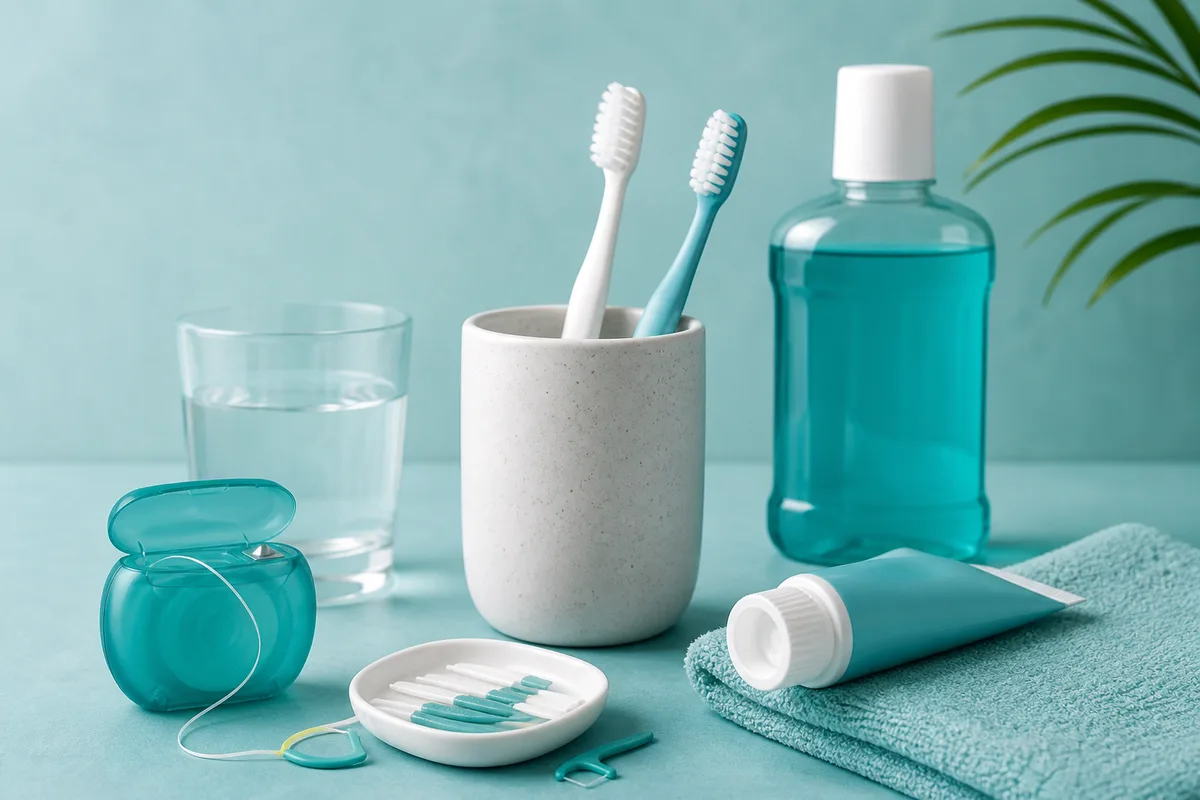
The drugstore aisle has expanded well beyond string, and the options can help — with caveats. Floss picks are convenient and far better than skipping, but the fixed little span can't wrap a tooth in a true C-shape, so they clean a bit less thoroughly. Interdental brushes — tiny cone-shaped brushes — are excellent for larger gaps, around bridges, and for many people with gum disease, often outperforming string in wider spaces. Air flossers and disposable picks each have a niche. The honest takeaway: the best interdental tool is the one that matches your mouth and that you'll use daily. We're glad to look at your spacing and dexterity and point you to the right one rather than leaving you to guess in the aisle.
Technique tips that make either one work
- With floss, hug each tooth in a C-shape and ease below the gumline — don't snap it straight down into the gum
- With a water flosser, start on a low setting (high settings spray everywhere) and trace slowly along the gumline, pausing between teeth
- Clean between every tooth, including behind the very last molars, which everyone forgets
- Do it once a day, ideally at night, before you brush
Common questions from Downey patients
My gums bleed when I floss — should I stop? Just the opposite. Bleeding is usually inflammation from plaque, and gentle daily cleaning typically clears it within a week or two. If it lingers, let us check it.
Are floss picks good enough? They're better than skipping it, but they can't wrap the tooth the way fingers and string can. Use them for convenience, not as your only method.
Does a water flosser replace brushing? No — it replaces (or supplements) flossing. You still brush twice a day.
How long does a water flosser reservoir need to last? One fill is plenty for a full mouth. If you're running out, you're likely on too high a setting — dial it back and move methodically.
Still seeing blood when you clean between your teeth, or not sure your technique is doing the job? A professional cleaning and a quick coaching session go a long way — and if gum disease is present, our periodontal care team can help. Book a visit with Dr. Sameer Aljanedi in Downey. Se habla español.
Have questions about your smile?
Dr. Sameer Aljanedi and the team at Rio Hondo Dental Office are here to help. Se habla español.