Family Dentistry
Dental X-Rays Explained: Are They Safe for My Family?
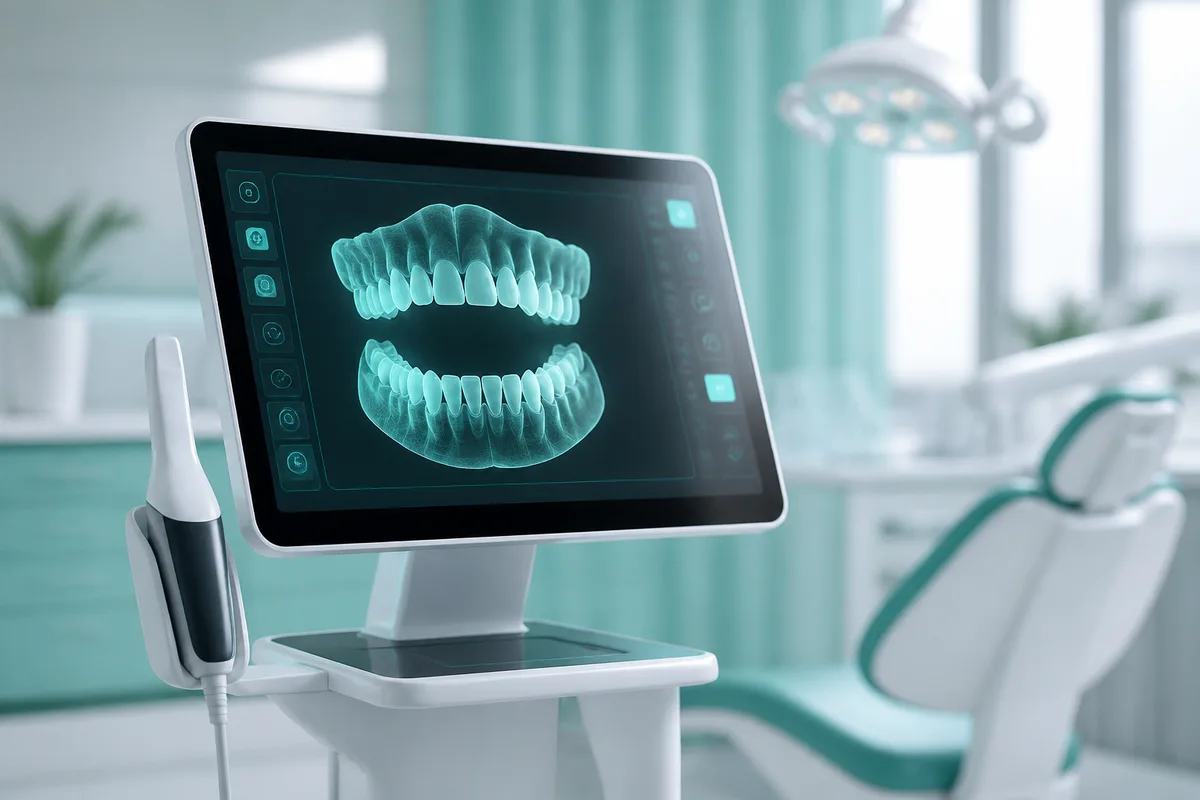
"Do we really need X-rays today?" It's one of the most reasonable questions a parent can ask, and we'd rather you ask it than quietly worry about it. Nobody wants needless radiation, especially for a child. The honest answer is that dental X-rays are one of the most useful tools we have — and with modern digital sensors, the dose is genuinely tiny. Here's the straight explanation so you can decide with real information instead of a vague unease.
The short version
- X-rays reveal cavities between teeth, decay under fillings, infections, and bone loss that an exam cannot see.
- Modern digital X-rays use up to 80–90% less radiation than the old film systems.
- A set of bitewings is roughly a day or two of natural background radiation — less than a cross-country flight.
- We use lead aprons and thyroid collars and take only the images you actually need.
- Frequency is based on your risk, not a fixed schedule; many healthy adults go one to two years between sets.
- Bitewings spot cavities, periapicals show one whole tooth, and panoramics show the entire jaw.
- We postpone elective X-rays during pregnancy and can often reuse records from a previous dentist.
- Catching decay early almost always means a smaller, less expensive filling instead of a crown or root canal.
- Tell us if you are or might be pregnant so we can adjust or postpone imaging.
- We accept most PPO and HMO plans plus Denti-Cal and Medi-Cal for your whole family.
Why we can't skip the inside view
A visual exam only shows the surfaces we can see — which is a fraction of each tooth. X-rays reveal the rest: cavities forming between teeth where they touch, decay sneaking in under an old filling, infection brewing at a root tip, bone loss from gum disease, and, in kids, exactly how the adult teeth are lining up beneath the baby teeth. Catching any of these early almost always means smaller, cheaper, less invasive treatment. Diagnosing a mouth without X-rays is a little like inspecting a house without ever looking inside the walls.
Putting the radiation in perspective
This is the part that reassures most parents. Modern digital X-rays use up to 80–90% less radiation than the old film systems many of us grew up with. A typical set of two to four bitewing X-rays delivers roughly the same dose you'd absorb from natural background radiation over a day or two of ordinary life — the cosmic rays and ground sources we're all exposed to constantly. To put it another way, a cross-country flight exposes you to more radiation than a set of dental bitewings. We also use lead aprons and thyroid collars and follow the "as low as reasonably achievable" principle, which in plain terms means we take the images we need to keep you healthy and not one more.
How often is "often enough"?
- Children may need X-rays a bit more frequently, because their mouths change fast and they're more prone to cavities between teeth.
- Adults with healthy teeth and gums often need bitewings only every one to two years.
- Anyone with gum disease, frequent cavities, dry mouth, or new symptoms may need them more often to stay ahead of trouble.
There's no rigid, everyone-gets-them-every-visit rule. We base the timing on your individual risk and history. If you bring records from a previous dentist, we'll often use those rather than repeat images.
What the different X-rays actually show
It helps to know what we're taking and why. Bitewings capture the crowns of the upper and lower back teeth in one view — the workhorse for spotting cavities between teeth. Periapical images show a single tooth from crown to root tip, which is what we reach for when a specific tooth hurts or we're checking for an infection or before a root canal. A panoramic X-ray is a single wide image of the entire jaw, useful for evaluating wisdom teeth, planning implants, and tracking how a child's adult teeth are developing. We choose the smallest image that answers the question, rather than defaulting to a full set every time.
Pregnancy and special situations
We routinely postpone elective X-rays during pregnancy and shield the abdomen and thyroid whenever imaging is genuinely necessary — for example, to find the source of a painful infection, where diagnosing the problem protects both mom and baby. Always tell us if you are or might be pregnant. For young children, we keep imaging quick and reassuring, and we're glad to show you what we're looking at.
Common questions from Downey families
Can my child wear the lead apron too? Absolutely — every patient gets appropriate protection, and we make kids' imaging fast and low-stress.
Do I have to get X-rays at every cleaning? No. Many healthy adults go a year or two between sets. We tailor it to your needs, not the calendar.
What's the difference between bitewings and a panoramic X-ray? Bitewings show the crowns of the back teeth for spotting cavities; a panoramic gives a wide single image of the whole jaw, useful for wisdom teeth, implants, and growth in kids.
Can you reuse X-rays from my old dentist? Often yes — request them before your visit and we may be able to avoid retaking images entirely.
Looking for a family dentist in Downey who explains things instead of rushing you? Schedule your family's checkups with Dr. Sameer Aljanedi — we welcome kids, accept most PPO and HMO plans plus Denti-Cal and Medi-Cal, and se habla español. Learn more on our children's dentistry page.
Have questions about your smile?
Dr. Sameer Aljanedi and the team at Rio Hondo Dental Office are here to help. Se habla español.